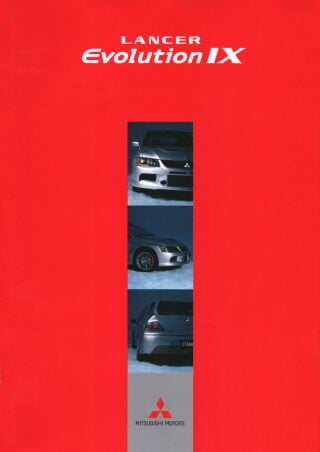

LANCER Evolution IX
MITSUBISHI MOTORS
Your trusted source of JDM parts shipped direct from Japan

Japan · April 2005
Turn for full screen
Nothing to translate on this page.
MITSUBISHI MOTORS
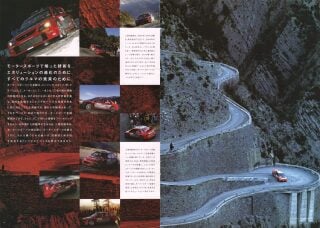
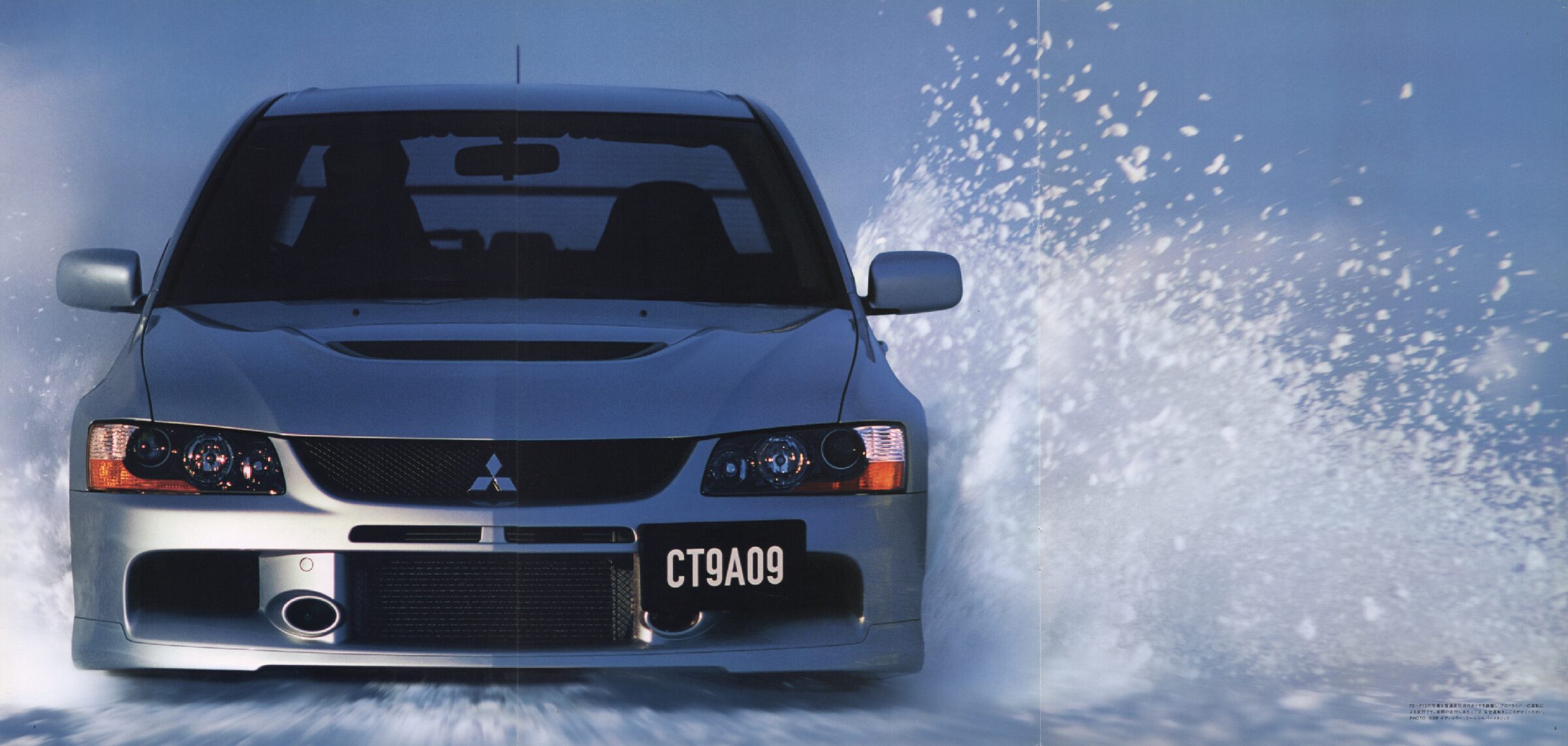
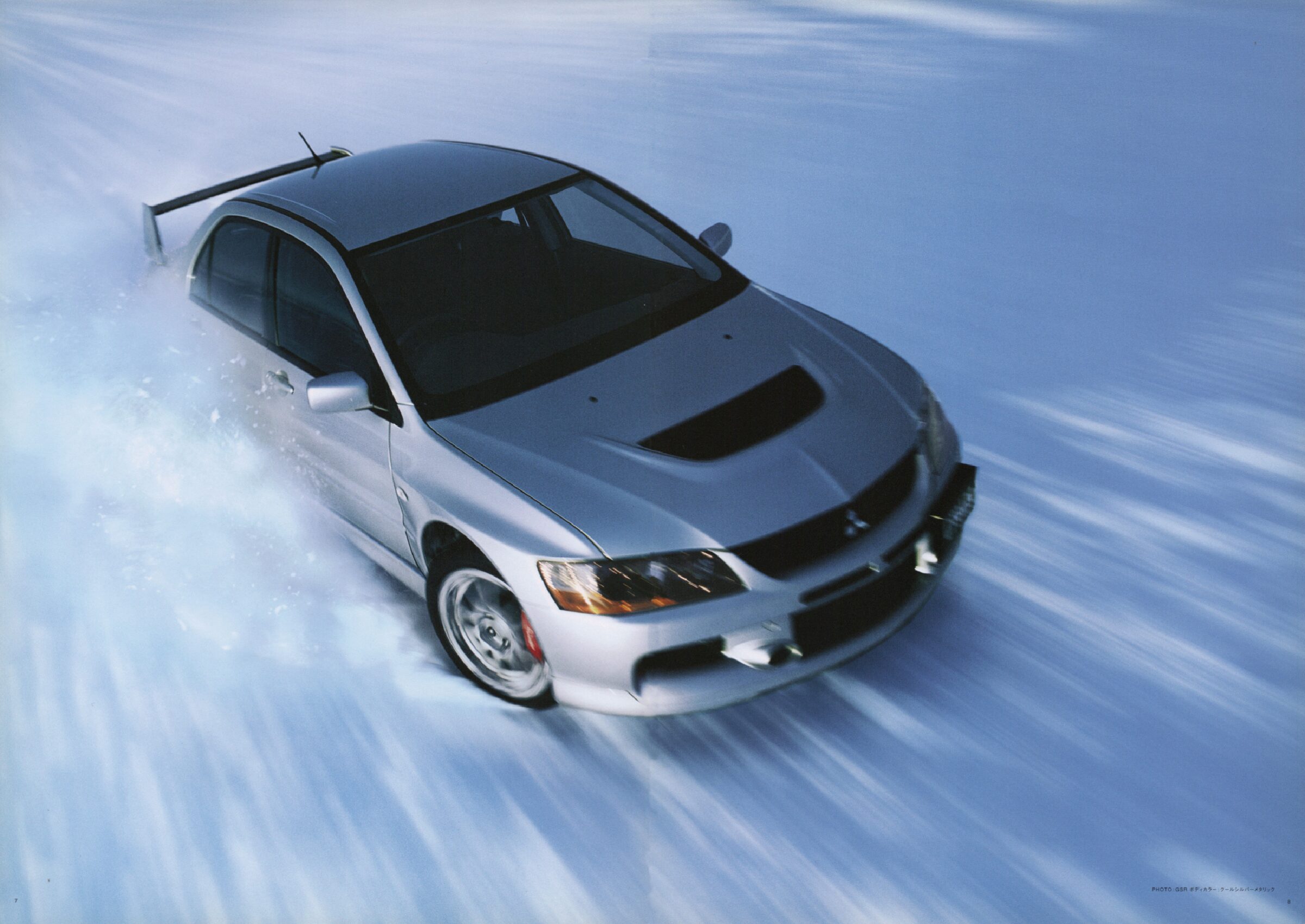
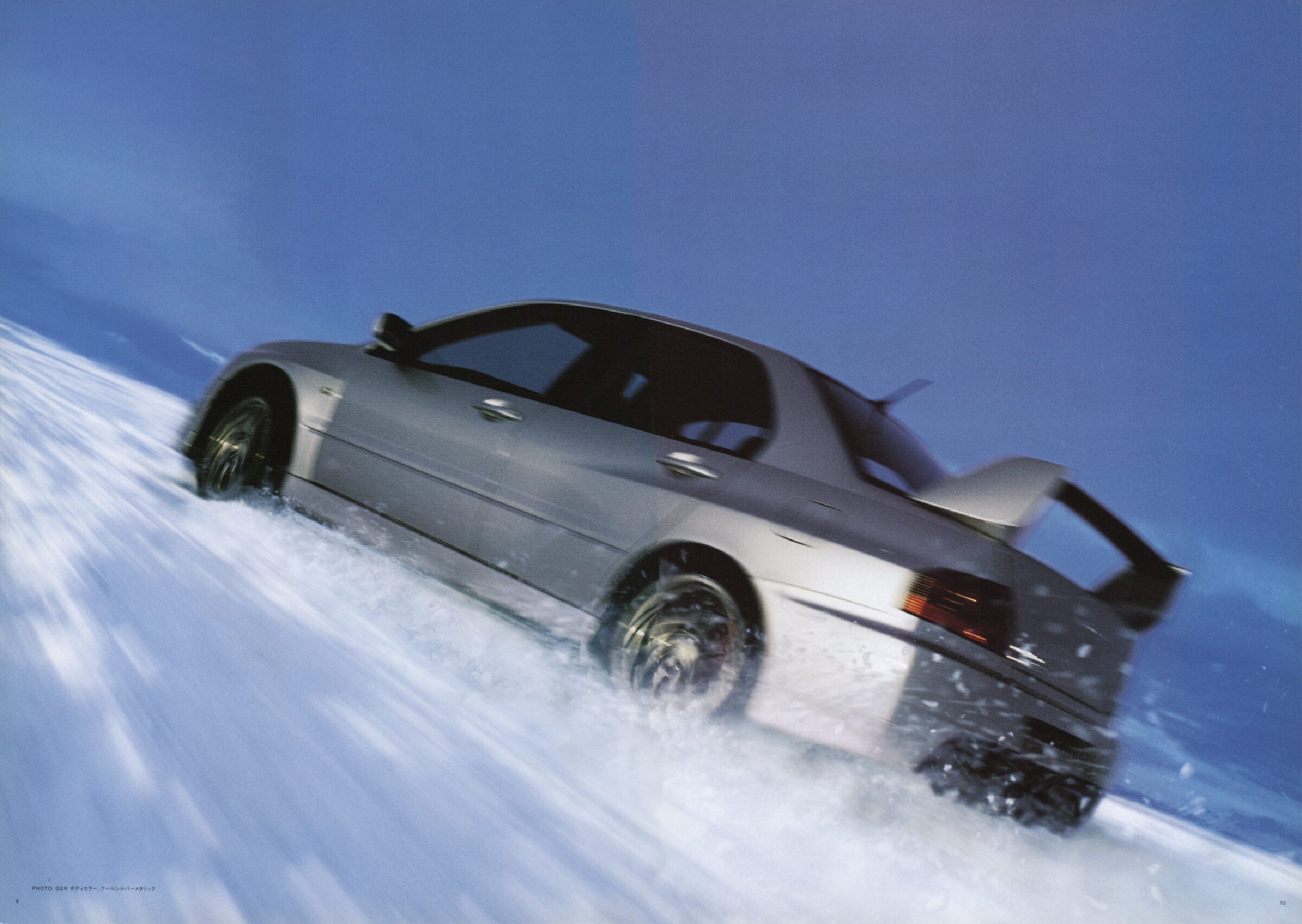
"Speed" in motorsport does not come from a higher-performance machine alone.
It is how fully the driver can draw out the machine's excellent potential.
The evolution of the Evolution IX was, truly, an evolution for the driver.
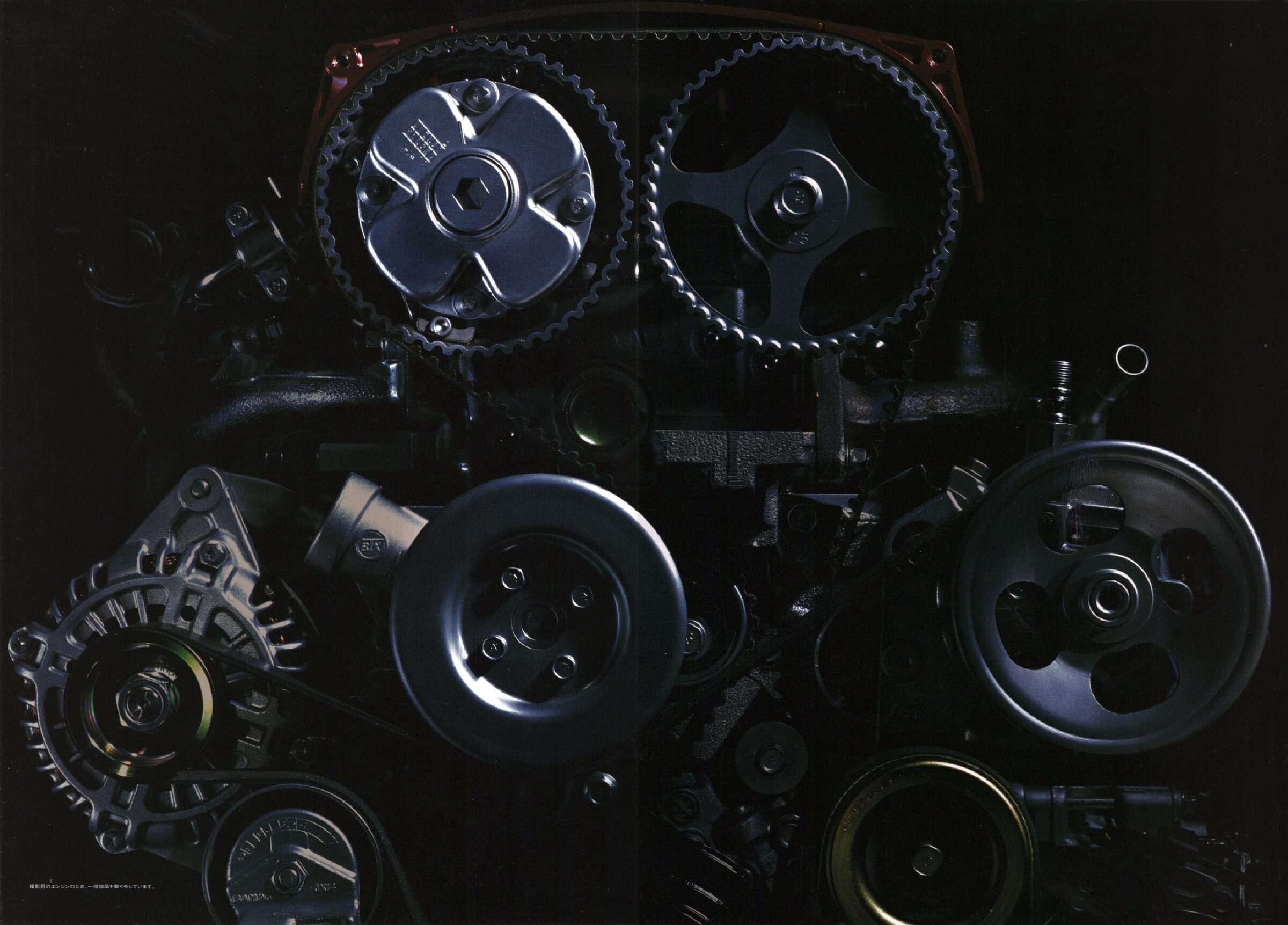
Aiming for high performance and high response across the range, the engine became a MIVEC turbo,
making strong acceleration available instantly at any engine speed and road speed.
In the suspension, a refined rear suspension setting
raises the cornering performance of All Wheel Control even further.
Aiming for a comfortable driver's space, attention was also paid to cabin sound insulation.
And the aluminum roof panel, which brings lighter weight and a lower center of gravity,
and the BILSTEIN shock absorbers and brembo brakes carried over,
are nothing other than choices made to deepen the bond with the car.
Every driver who takes the steering wheel, within their technique,
can easily draw out the high performance and master it.
The thrill of becoming one with the car, found only in the Evolution IX, is here.
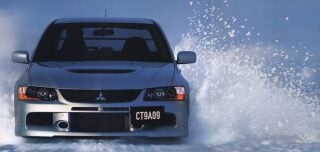
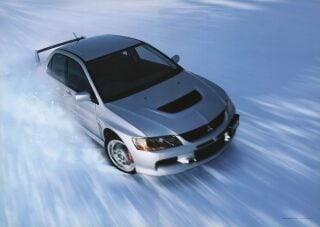
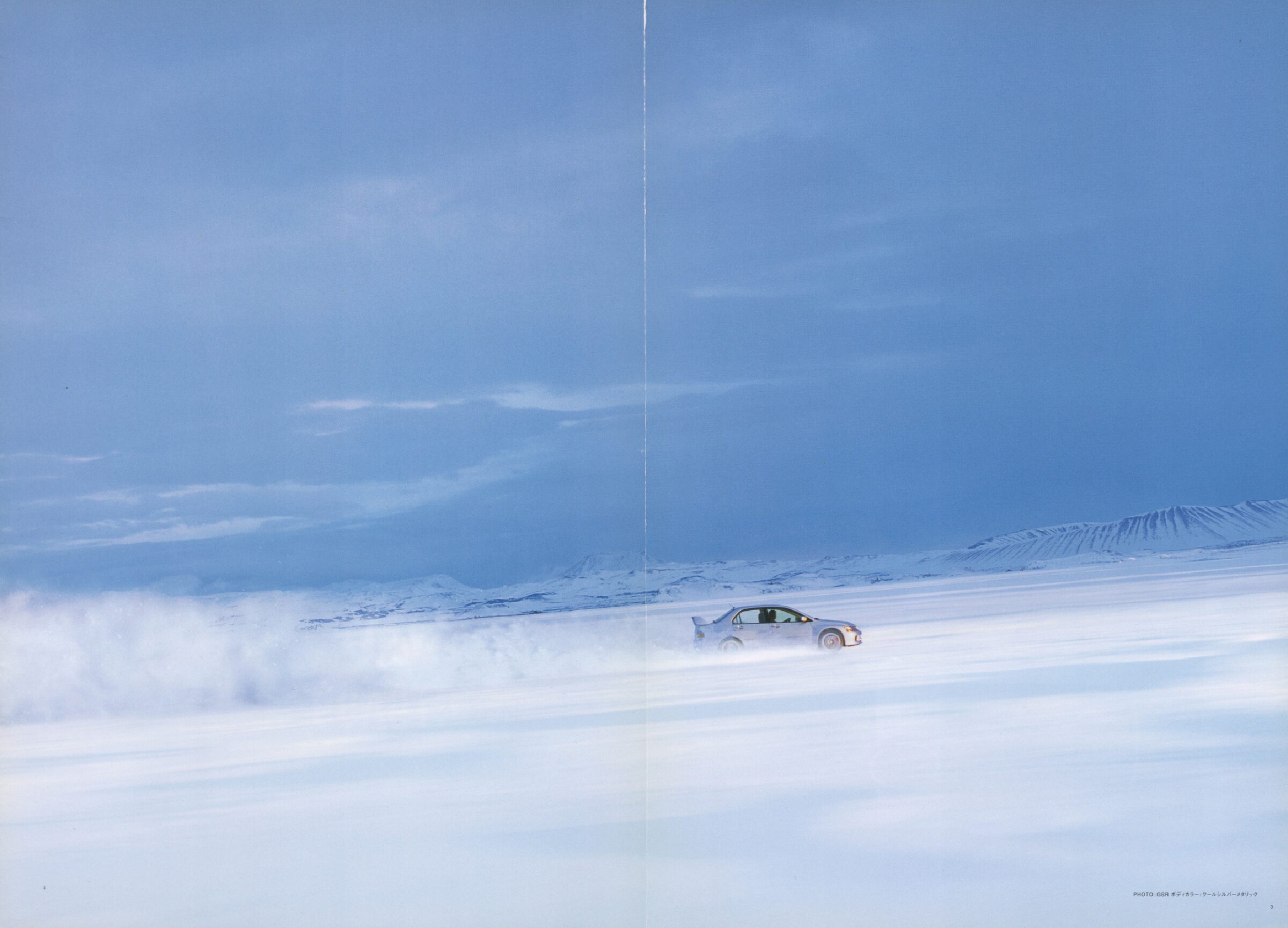
PHOTO: GSR, body color: Cool Silver Metallic
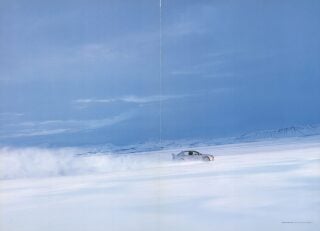
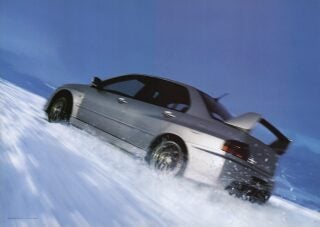
Photos on P2 to P10 show cars fitted with tires for driving on snow, driven by professional drivers. When driving, please always drive safely.
PHOTO: GSR, body color: Cool Silver Metallic
PHOTO: GSR, body color: Cool Silver Metallic
PHOTO: GSR, body color: Cool Silver Metallic
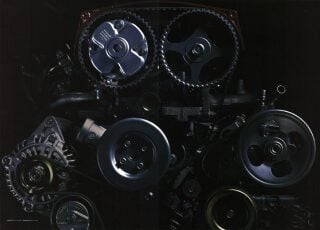
Some parts have been removed from the engine for the photograph.
High performance across the range, high response across the range.
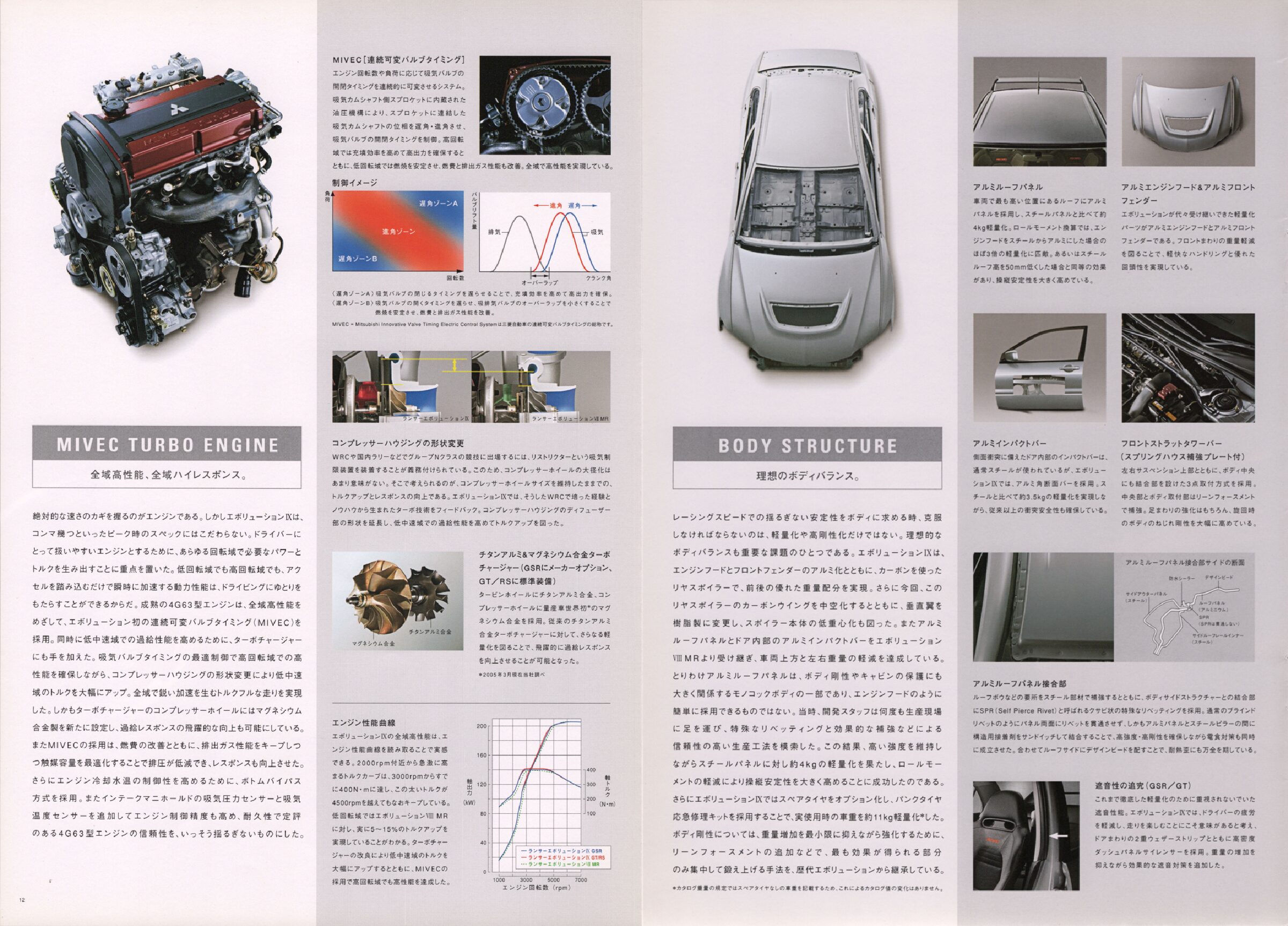
The engine holds the key to absolute speed. But the Evolution IX is not fixated on peak figures measured in fractions of a second. To make an engine easy for the driver to handle, the emphasis was on producing the power and torque needed at every engine speed, because performance that accelerates instantly at a press of the accelerator, at low revs or high, gives the driver room to spare. Aiming for high performance across the range, the mature 4G63 engine adopts continuous variable valve timing (MIVEC), a first for the Evolution. At the same time, the turbocharger was also improved to raise boost at low and medium speeds. While optimal control of the intake valve timing secures high performance at high revs, a change to the shape of the compressor housing raises torque at low and medium speeds substantially, delivering torque-rich driving with sharp acceleration across the range. The turbocharger also gains a new magnesium alloy compressor wheel, for a dramatic improvement in boost response. MIVEC also improves fuel economy, and by optimizing the catalyst capacity while keeping exhaust emissions performance, lowers exhaust back pressure and improves response. A bottom bypass system improves control of the engine coolant temperature. And an intake pressure sensor and intake temperature sensor added to the intake manifold raise the precision of engine control, making the reliability of the 4G63 engine, renowned for durability, more unshakeable still.
A system that varies the opening and closing timing of the intake valves continuously, according to engine speed and load. A hydraulic mechanism built into the intake camshaft sprocket retards or advances the phase of the intake camshaft connected to the sprocket, controlling the intake valve timing. At high revs it raises charging efficiency for high output, and at low revs it stabilizes combustion and improves fuel economy and exhaust emissions, achieving high performance across the range.
The diagrams are labeled:
(Retard zone A) Delaying the timing at which the intake valves close raises charging efficiency for high output.
(Retard zone B) Delaying the timing at which the intake valves open reduces the overlap of the intake and exhaust valves, stabilizing combustion and improving fuel economy and exhaust emissions.
MIVEC = Mitsubishi Innovative Valve Timing Electric Control System is the general name for Mitsubishi Motors' continuous variable valve timing.
The compressor housings pictured:
To compete in the Group N class in the WRC and Japanese rallies, a car must be fitted with a restrictor, a device limiting intake. Enlarging the compressor wheel therefore means little. What was considered instead was raising torque and response while keeping the compressor wheel size. The Evolution IX feeds back turbo technology born of the experience and know-how gained in the WRC: the diffuser section of the compressor housing is extended, raising boost at low and medium speeds for more torque.
The turbine wheel is titanium-aluminum alloy, and the compressor wheel magnesium alloy, a world first* for a production car. Lighter still than the earlier titanium-aluminum alloy turbocharger, it brings a dramatic improvement in boost response.
The wheels pictured:
*Mitsubishi Motors' research, as of March 2005.
The Evolution IX's high performance across the range can be felt by reading the engine performance curves. The torque curve, rising sharply from around 2,000 rpm, already reaches 400 N·m at 3,000 rpm, and this broad torque holds even past 4,500 rpm. At low revs it delivers a full 5 to 15% more torque than the Evolution VIII MR. The improved turbocharger raises torque at low and medium speeds substantially, while MIVEC brings high performance at high revs too.
The chart is labeled:
The ideal body balance.
When a body must give unshakeable stability at racing speeds, lighter weight and higher rigidity are not all that must be overcome: ideal body balance is an important issue too. The Evolution IX achieves excellent front-to-rear weight distribution with an aluminum engine hood and front fenders and a rear spoiler using carbon. This time the carbon wing of the rear spoiler is also made hollow, and the vertical fins are changed to resin, lowering the center of gravity of the spoiler itself. The aluminum roof panel and the aluminum impact bars inside the doors, carried over from the Evolution VIII MR, reduce weight high up and at the sides of the car. The aluminum roof panel in particular is part of the monocoque body, closely tied to body rigidity and the protection of the cabin, and could not be adopted as simply as an engine hood. At the time, the development staff went to the production line again and again, searching for a reliable production method with special riveting and effective reinforcement. The result keeps high strength while saving about 4 kg against a steel panel, and succeeded in greatly improving handling stability by reducing the roll moment. The Evolution IX also makes the spare tire an option and adopts a puncture repair kit, making the car about 11 kg lighter* in actual use. For body rigidity, the approach handed down from Evolution to Evolution is kept: strengthening while keeping added weight to a minimum, concentrating on only the parts where it is most effective, such as with added reinforcements.
*Catalog weights are given without a spare tire, so this does not change the catalog figure.
An aluminum panel for the roof, the highest point of the car, saves about 4 kg against a steel panel. Converted to roll moment, this rivals nearly three times the saving of changing the engine hood from steel to aluminum. It has the same effect as lowering a steel roof by 50 mm, greatly improving handling stability.
The lightweight parts the Evolution has handed down from generation to generation are the aluminum engine hood and aluminum front fenders. Less weight around the front brings nimble handling and excellent turn-in.
The impact bars inside the doors, for side impacts, are usually steel, but the Evolution IX uses aluminum bars with a square cross-section. About 3.5 kg lighter than steel, they still ensure better crash safety than before.
A three-point mounting, joined at the tops of the left and right suspension and at the center of the body. The center section and the body mounts are strengthened with reinforcements. Besides strengthening the suspension, it greatly raises the torsional rigidity of the body in cornering.
Cross-section of the side of the aluminum roof panel joint, labeled:
Key parts such as the roof bows are reinforced with steel members, and the joint with the body side structure uses special wedge-shaped riveting called SPR (Self Pierce Rivet). Unlike ordinary blind rivets, the rivets do not pass through both faces of the panel, and a structural adhesive is sandwiched between the aluminum panel and the steel pillar to join them, securing high strength and rigidity while also preventing galvanic corrosion. A design bead along the side of the roof also guards fully against heat distortion.
Until now, sound insulation was given little weight, for the sake of thorough weight saving. On the Evolution IX, believing that what matters is reducing driver fatigue and making driving enjoyable, a high-density dash panel silencer is adopted along with double weatherstrips around the doors, adding effective sound insulation while keeping added weight down.
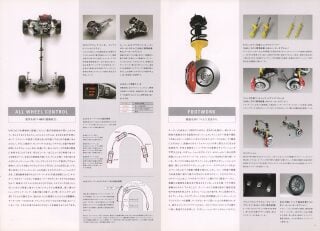
Four wheels moving with intent.
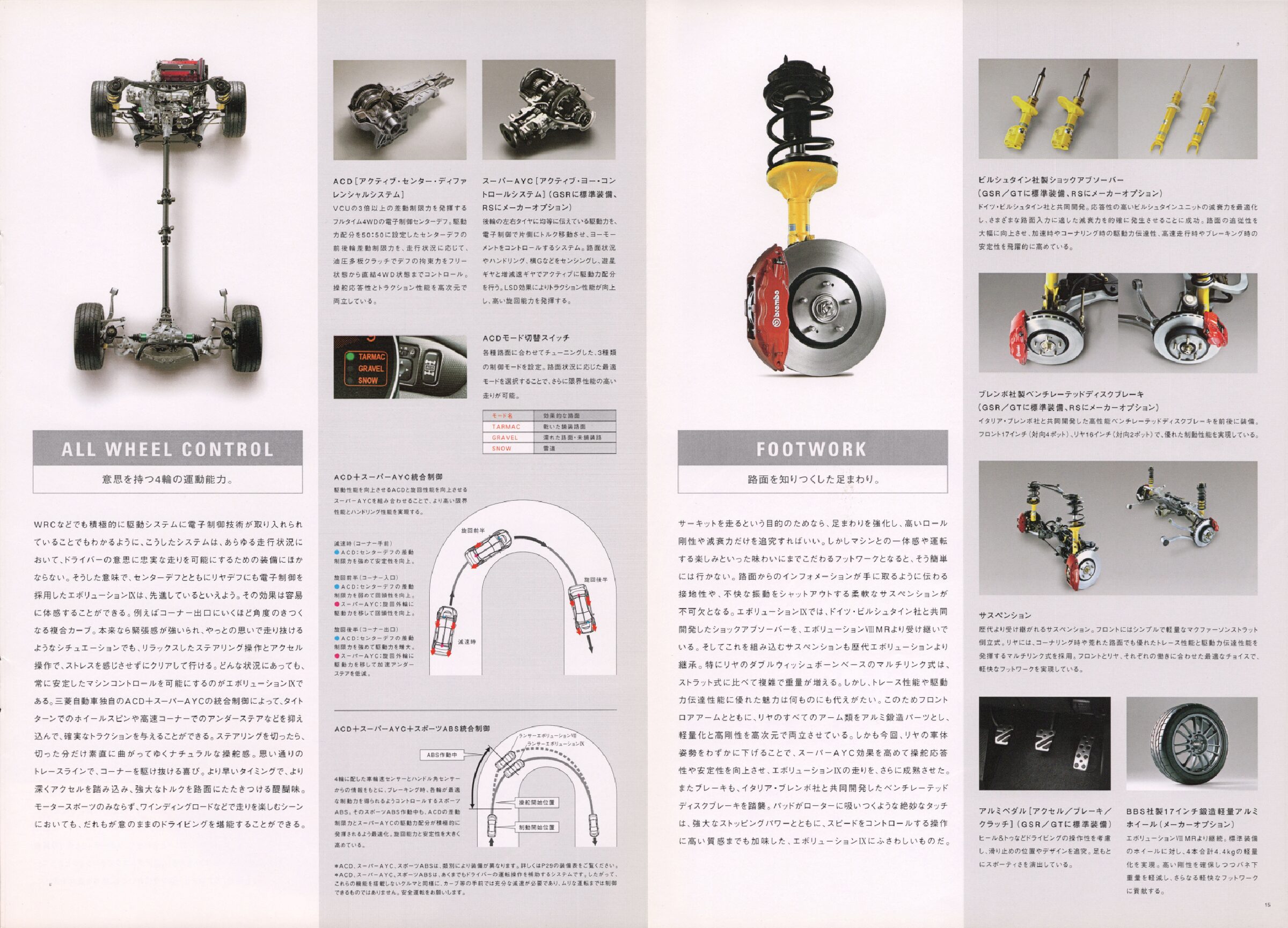
As the active use of electronic control in drive systems in the WRC and elsewhere shows, such systems are nothing other than equipment that lets the car drive faithfully to the driver's intent in every driving situation. In that sense, the Evolution IX, with electronic control of the rear differential as well as the center differential, can be called advanced. The effect is easy to feel. Take a compound curve that tightens toward the corner exit: a situation that would normally be tense, driven through with relief, is cleared with relaxed steering and throttle, without stress. Whatever the situation, the Evolution IX makes stable control of the machine possible at all times. Mitsubishi Motors' integrated control of ACD + Super AYC holds down wheelspin in tight turns, understeer in fast corners and more, giving sure traction. Turn the steering wheel, and the car turns naturally, exactly as far as you turned it. The joy of driving through a corner on the line you intended. The deep pleasure of pressing the accelerator earlier and deeper, and putting powerful torque down onto the road. Not only in motorsport, but on winding roads and wherever driving is enjoyed, anyone can enjoy driving just as they mean to.
An electronically controlled center differential for full-time 4WD, with more than three times the differential limiting force of a VCU. With the center differential's drive split set at 50:50, a hydraulic multi-plate clutch controls the front-to-rear differential limiting force to suit driving conditions, from free to locked 4WD, achieving both steering response and traction at a high level.
A system that controls yaw moment by electronically moving torque to one side of the driving force otherwise shared equally between the left and right rear tires. It senses the road surface, steering, lateral G and more, and actively distributes driving force with planetary gears and speed-increasing and reducing gears. LSD effect improves traction, for high cornering ability.
Three control modes, each tuned for a kind of road surface. Choosing the best mode for the road conditions allows driving at a still higher limit.
| Mode | Effective surface |
|---|---|
| TARMAC | Dry paved roads |
| GRAVEL | Wet roads, unpaved roads |
| SNOW | Snow |
Combining ACD, which improves drive performance, with Super AYC, which improves cornering performance, brings higher limits and better handling.
When braking (before the corner)
First half of the turn (corner entry)
Second half of the turn (corner exit)
The diagram is labeled:
Sports ABS controls braking so that each wheel gets the best braking force, from the information of wheel speed sensors at all four wheels and a steering angle sensor. Even while the Sports ABS is working, the ACD's differential limiting force and the Super AYC's drive distribution are optimized to work actively, greatly raising cornering ability and stability.
The diagram is labeled:
Suspension that knows the road inside out.
For the purpose of running on a circuit, it would be enough to strengthen the suspension and pursue only high roll rigidity and damping force. But footwork that cares about the feel of being one with the machine and the pleasure of driving is not so simple. Road holding that conveys information from the road surface as if held in the hand, and supple suspension that shuts out unpleasant vibration, are essential. The Evolution IX carries over from the Evolution VIII MR the shock absorbers developed jointly with BILSTEIN of Germany. The suspension they fit into is also inherited from Evolutions before it. The double-wishbone-based multi-link rear in particular is more complex and heavier than a strut type, but the excellent tracking and transmission of driving force are irreplaceable. So the front lower arms, and every arm at the rear, are forged aluminum parts, achieving both lighter weight and high rigidity at a high level. This time, the rear of the body sits slightly lower, increasing the effect of Super AYC and improving steering response and stability, making the Evolution IX's driving still more mature. The brakes are also carried over: ventilated disc brakes developed jointly with brembo of Italy. A superb touch, as if the pads cling to the rotors, adds a high-quality feel to controlling speed alongside powerful stopping power, worthy of the Evolution IX.
Developed jointly with BILSTEIN of Germany. Optimizing the damping force of the highly responsive BILSTEIN units succeeds in producing exactly the right damping force for every kind of road input. Road following is greatly improved, dramatically raising the transmission of driving force when accelerating and cornering, and stability at high speed and under braking.
High-performance ventilated disc brakes developed jointly with brembo of Italy, front and rear. 17-inch at the front (opposed 4-pot) and 16-inch at the rear (opposed 2-pot), for excellent braking performance.
Suspension handed down through the generations. At the front, a simple, light inverted MacPherson strut. At the rear, a multi-link type giving excellent tracking and transmission of driving force when cornering and on rough roads. The best choice for the work of each, front and rear, delivers nimble footwork.
With driving operations such as heel-and-toe in mind, the position and design of the anti-slip grips were refined, bringing a sporty look to the footwell.
Carried over from the Evolution VIII MR. 4.4 kg lighter in total for the four than the standard wheels. Keeping high rigidity while reducing unsprung weight, they contribute to still more nimble footwork.
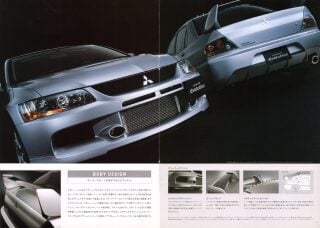
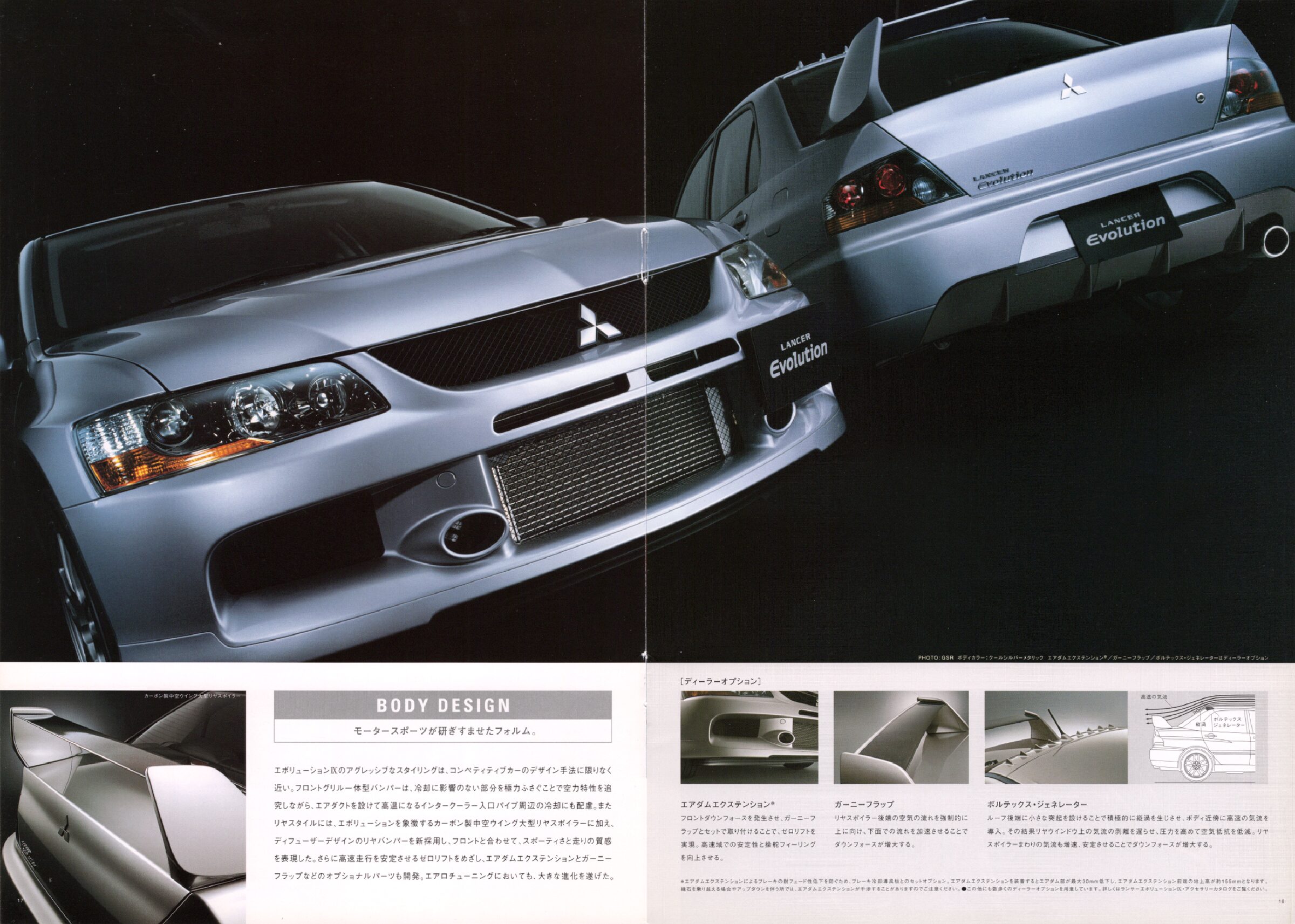
PHOTO: GSR, body color: Cool Silver Metallic. The air dam extension*, Gurney flap and vortex generators are dealer options.
The picture is labeled:
A form honed by motorsport.
The Evolution IX's aggressive styling comes as close as can be to the design methods of a competition car. The bumper, integrated with the front grille, pursues aerodynamics by closing off as much as possible where cooling is not affected, while air ducts help cool the area around the intercooler inlet pipe, which runs hot. For the rear styling, alongside the large rear spoiler with a hollow carbon wing that symbolizes the Evolution, a new diffuser-design rear bumper together with the front expresses sportiness and quality of driving. Optional parts such as an air dam extension and a Gurney flap were also developed, aiming for zero lift to stabilize high-speed driving. Aero tuning, too, has made a great evolution.
Generates front downforce, and fitted together with the Gurney flap achieves zero lift, improving stability and steering feel at high speeds.
Forces the airflow at the trailing edge of the rear spoiler upward, accelerating the flow underneath to increase downforce.
Small projections at the trailing edge of the roof actively create vertical vortices, drawing fast airflow close to the body. This delays separation of the airflow over the rear window, raising pressure and reducing air resistance. The airflow around the rear spoiler is also sped up and stabilized, increasing downforce.
The diagram is labeled:
*To prevent the loss of brake fade resistance an air dam extension brings, it is a set option with brake cooling air guides. With the air dam extension fitted, the air dam is lowered by up to 30 mm, and the ground clearance at the front edge of the air dam extension is about 155 mm. Please take care: the air dam extension may touch when driving over curbs or on roads with ups and downs.
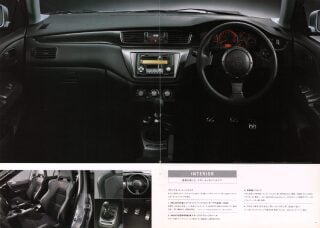
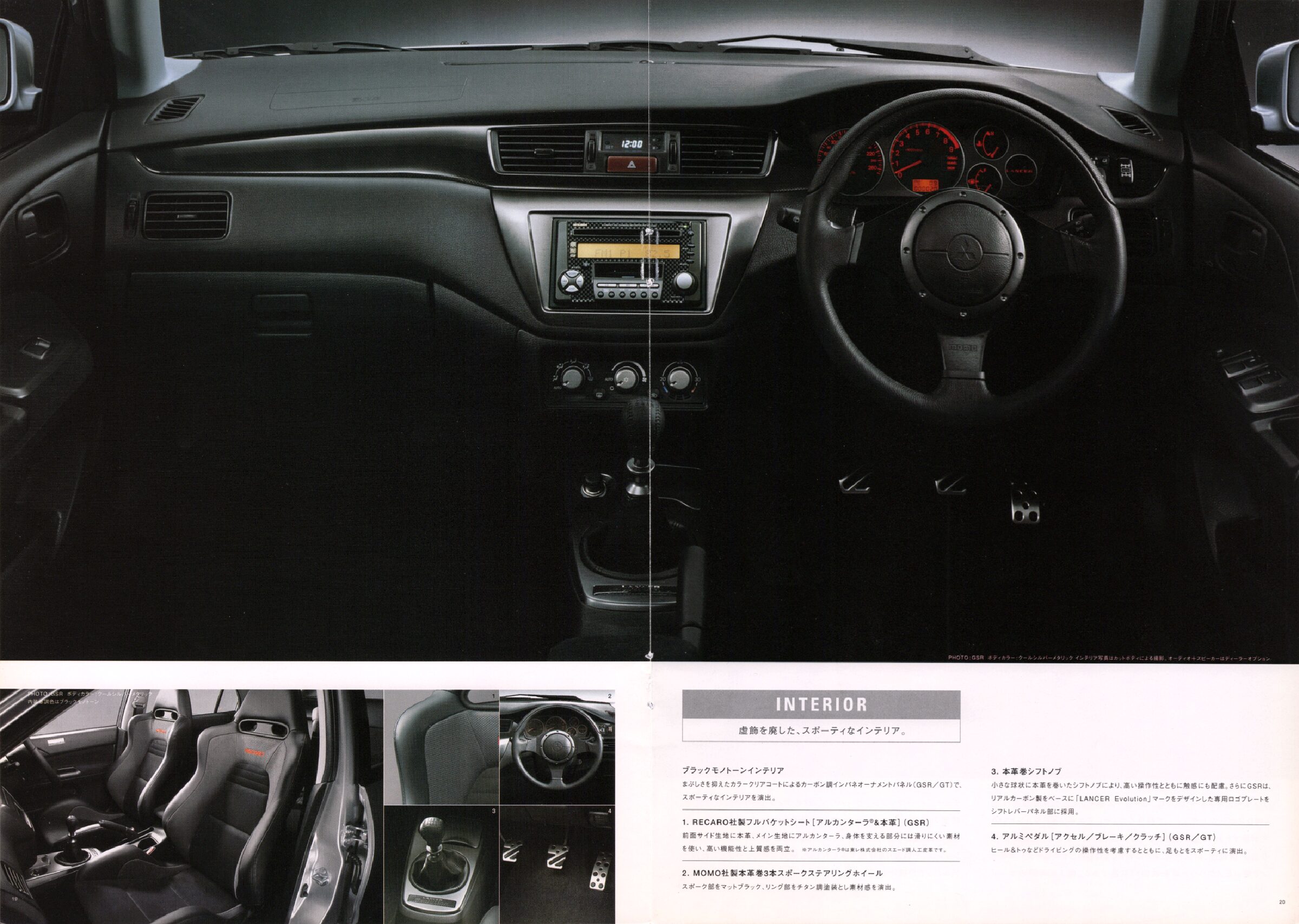
PHOTO: GSR, body color: Cool Silver Metallic. Interior photos were taken with a cutaway body. The audio and speakers are dealer options.
PHOTO: GSR, body color: Cool Silver Metallic. The interior color is Black Monotone.
A sporty interior, without ornament.
A carbon-look instrument panel ornament panel (GSR/GT) with a color clear coat that cuts glare creates a sporty interior.
Genuine leather on the front sides and Alcantara for the main fabric, with a non-slip material where the seat supports the body, achieving both high function and a quality feel. ※Alcantara® is Toray Industries' suede-like artificial leather.
Matte black spokes and a titanium-look painted rim bring out the feel of the materials.
A small, spherical shift knob wrapped in genuine leather gives easy operation and a pleasing touch. The GSR also has a dedicated logo plate on the shift lever panel, designed with the "LANCER Evolution" mark on a real carbon base.
Designed for ease of driving operations such as heel-and-toe, they also give the footwell a sporty look.
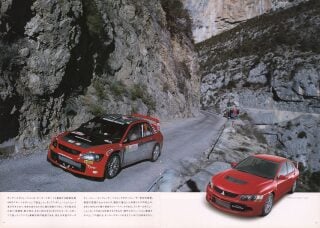
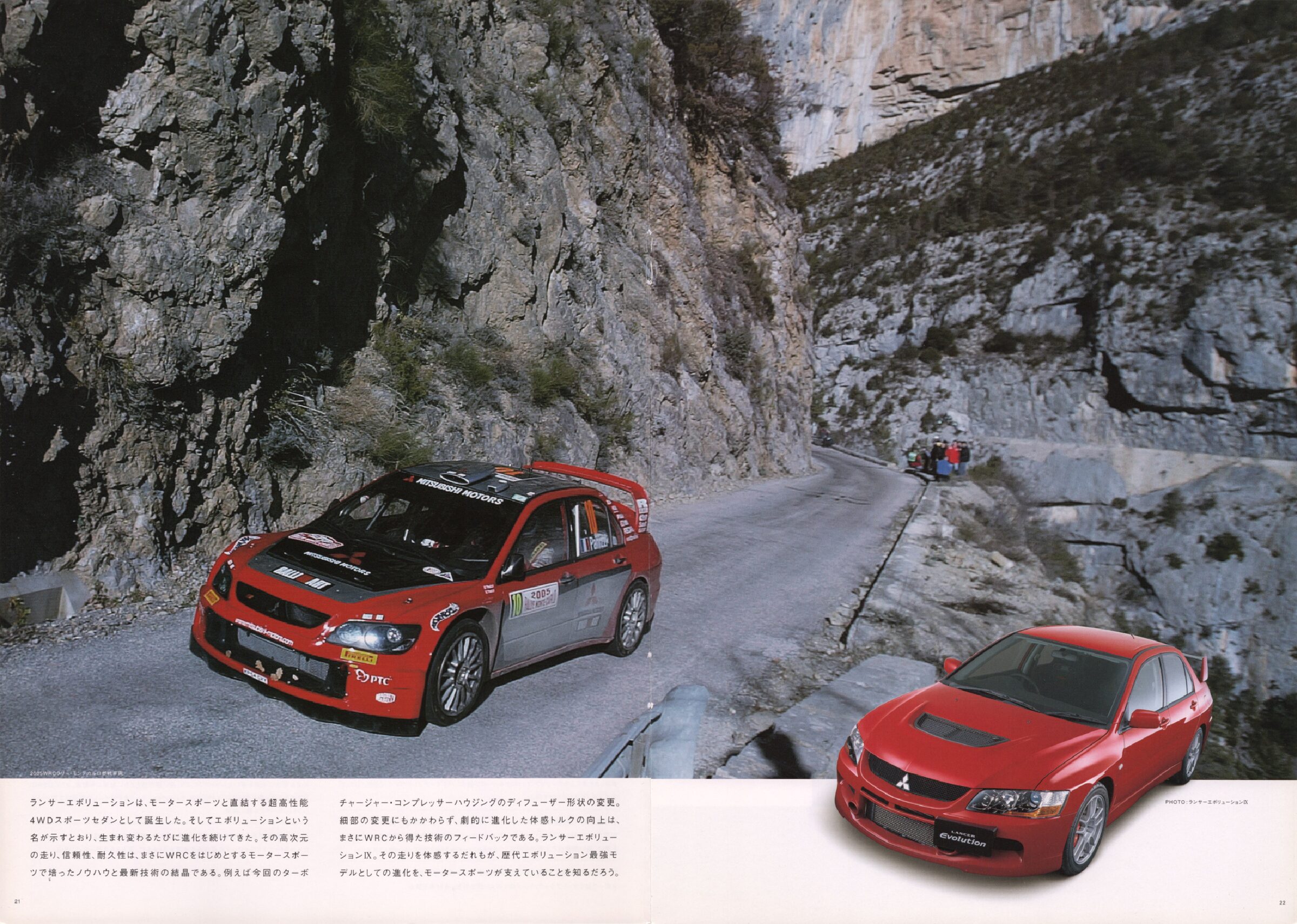
Car entered in the 2005 WRC Rallye Monte Carlo
The Lancer Evolution was born as an ultra-high-performance 4WD sports sedan directly linked to motorsport. And, as the name Evolution suggests, it has kept evolving each time it was reborn. The car's high-level driving, reliability and durability are the fruit of know-how gained in motorsport, the WRC above all, and the latest technology. Take this time's change to the diffuser shape of the turbocharger's compressor housing: despite being a change in detail, the dramatically improved torque you can feel is truly a feedback of technology gained from the WRC. Lancer Evolution IX. Anyone who feels how it drives will know that motorsport stands behind the evolution as the strongest Evolution yet.
PHOTO: Lancer Evolution IX
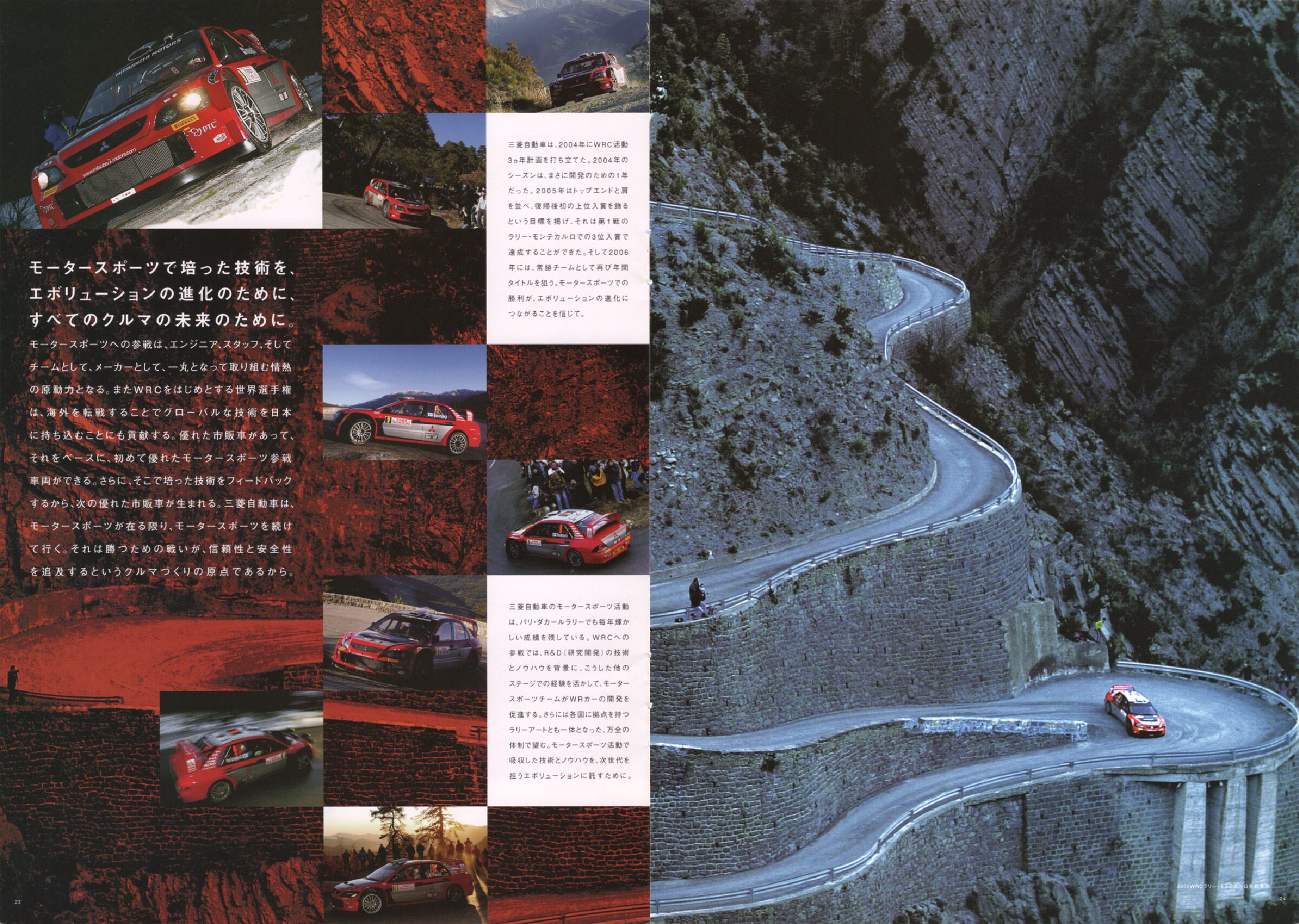
Taking part in motorsport is the driving force of a passion that engineers, staff, and the team and the company as a whole share as one. World championships, the WRC above all, also help bring global technology to Japan by competing abroad. Only with an excellent production car as the base can an excellent motorsport car be made. And because the technology built up there is fed back, the next excellent production car is born. Mitsubishi Motors will continue in motorsport for as long as motorsport exists, because the fight to win is the starting point of car-making that pursues reliability and safety.
Mitsubishi Motors drew up a three-year plan for WRC activities in 2004. The 2004 season was truly a year for development. For 2005 the goal was to stand shoulder to shoulder with the top teams and achieve a podium finish for the first time since returning, which was achieved with third place at the first round, the Rallye Monte Carlo. And in 2006, as a consistently winning team, it aims for the season title again. Believing that victory in motorsport leads to the evolution of the Evolution.
Mitsubishi Motors' motorsport activities have achieved brilliant results year after year in the Paris-Dakar Rally too. In the WRC, backed by the technology and know-how of R&D (research and development), the motorsport team makes use of experience from these other stages to advance the development of the WR Car. And it takes on the challenge with a complete organization, as one with Ralliart, which has bases in many countries. To hand the technology and know-how absorbed in motorsport to the Evolution of the next generation.
Car entered in the 2005 WRC Rallye Monte Carlo
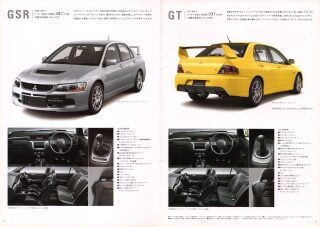
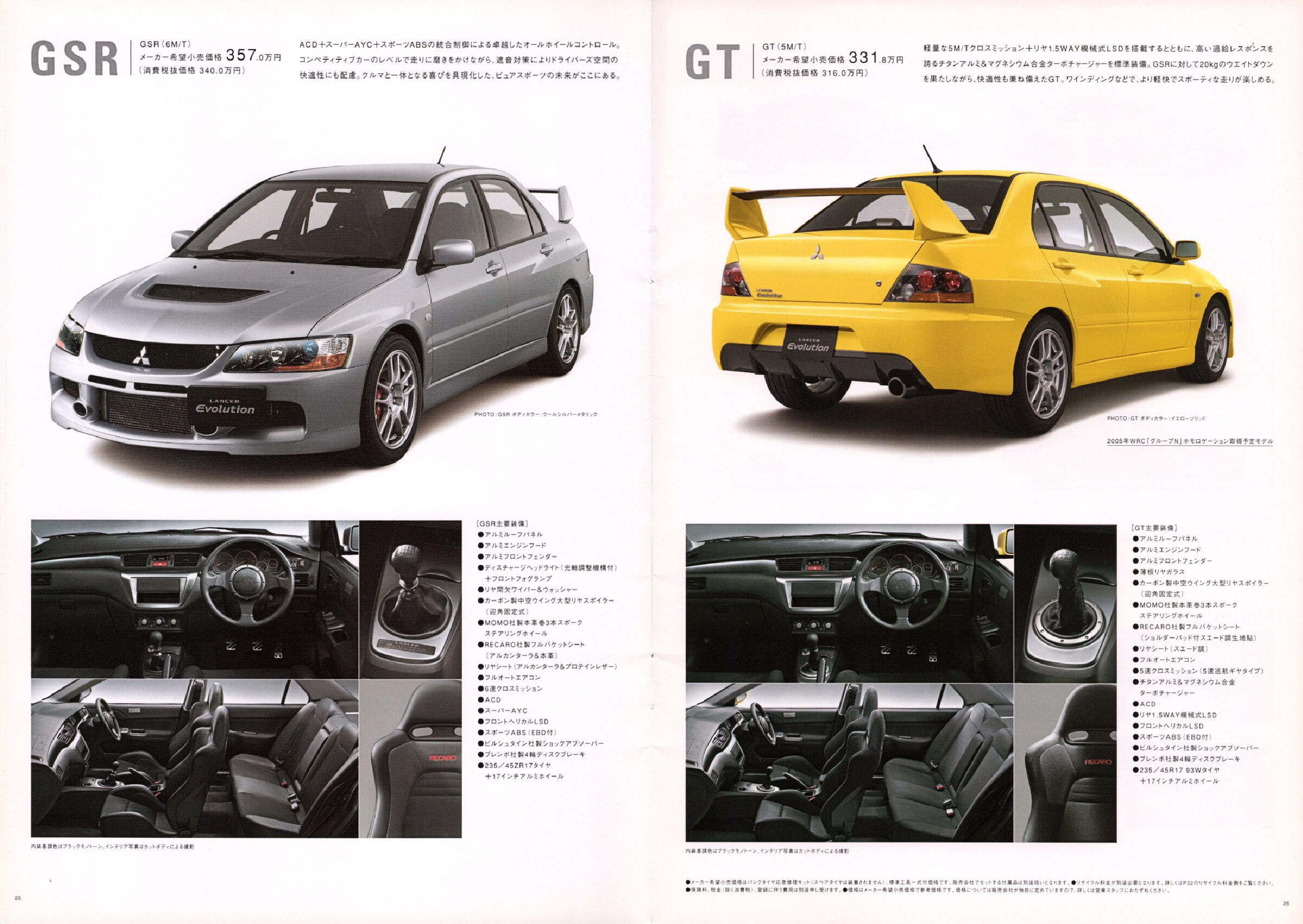
GSR (6M/T)
Manufacturer's suggested retail price ¥3,570,000
(¥3,400,000 before consumption tax)
Outstanding All Wheel Control through the integrated control of ACD + Super AYC + Sports ABS. While driving is honed to the level of a competition car, sound insulation also brings comfort to the driver's space. The future of the pure sports car, giving shape to the joy of becoming one with the car, is here.
PHOTO: GSR, body color: Cool Silver Metallic
The interior color is Black Monotone. Interior photos were taken with a cutaway body.
GT (5M/T)
Manufacturer's suggested retail price ¥3,318,000
(¥3,160,000 before consumption tax)
With a light 5M/T close-ratio transmission + rear 1.5-way mechanical LSD, and the titanium-aluminum & magnesium alloy turbocharger with high boost response as standard, the GT is 20 kg lighter than the GSR while also offering comfort. On winding roads and more, enjoy still lighter, sportier driving.
PHOTO: GT, body color: Yellow Solid
Model due for 2005 WRC "Group N" homologation
The interior color is Black Monotone. Interior photos were taken with a cutaway body.
*1: With door mirror electric folding control and hazard & room lamp answer-back. Power window closing can be added by customizing at a dealer. *2: SRS = Supplemental Restraint System, an occupant protection device that assists the seat belts. The SRS airbags work only when they sense an impact above a set level from the front, and do not work on impacts from the side or rear. The SRS airbags are a system developed on the premise that seat belts are worn, so always wear your seat belt. There are also items to take care with, such as never fitting a rear-facing child seat in the front passenger seat. Always read the owner's manual. *3: So that the security alarm is used once the functions are understood, it does not work as shipped from the factory. (The display sticker is not fitted at the factory.) For the factory setting and how to operate it, please read the owner's manual or ask our staff.
The aluminum roof has no mounting points, so a base carrier cannot be fitted. To fit the dealer-option base carrier to a GSR, please choose the maker-option electric tilt & slide glass sunroof or the steel roof.
*To prevent the loss of brake fade resistance an air dam extension brings, it is a set option with brake cooling air guides. With the air dam extension fitted, the air dam is lowered by up to 30 mm, and the ground clearance at the front edge of the air dam extension is about 155 mm. Please take care: the air dam extension may touch when driving over curbs or on roads with ups and downs.
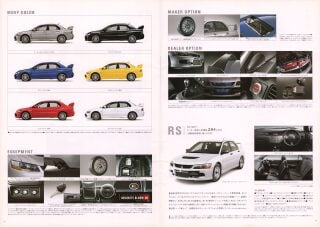
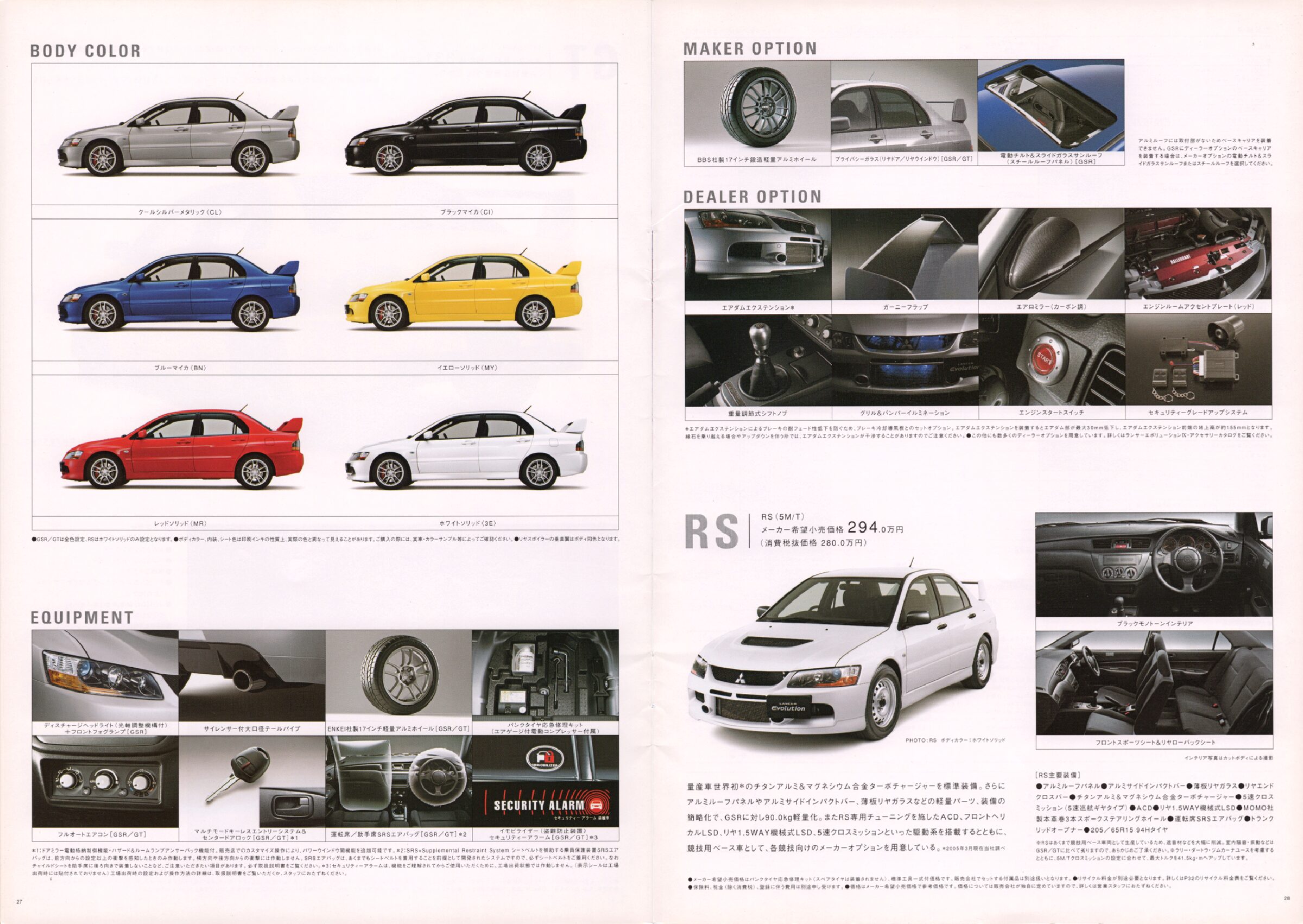
RS (5M/T)
Manufacturer's suggested retail price ¥2,940,000
(¥2,800,000 before consumption tax)
PHOTO: RS, body color: White Solid
The interior pictures are labeled:
Interior photos were taken with a cutaway body.
The titanium-aluminum & magnesium alloy turbocharger, a world first* for a production car, is standard. Lightweight parts such as the aluminum roof panel, aluminum side impact bars and thin rear glass, and simplified equipment, make it 90.0 kg lighter than the GSR. With a drivetrain of ACD with RS-specific tuning, front helical LSD, rear 1.5-way mechanical LSD and 5-speed close-ratio transmission, it is a base car for competition, with maker options for each kind of motorsport. *Mitsubishi Motors' research, as of March 2005.
※The RS is built purely as a base car for competition, so sound insulation and the like are greatly reduced. Please be aware in advance that cabin noise and vibration are worse than on the GSR/GT. ※With rally, dirt trial and gymkhana use in mind, maximum torque is raised to 41.5 kg·m to match the 5M/T close-ratio transmission.
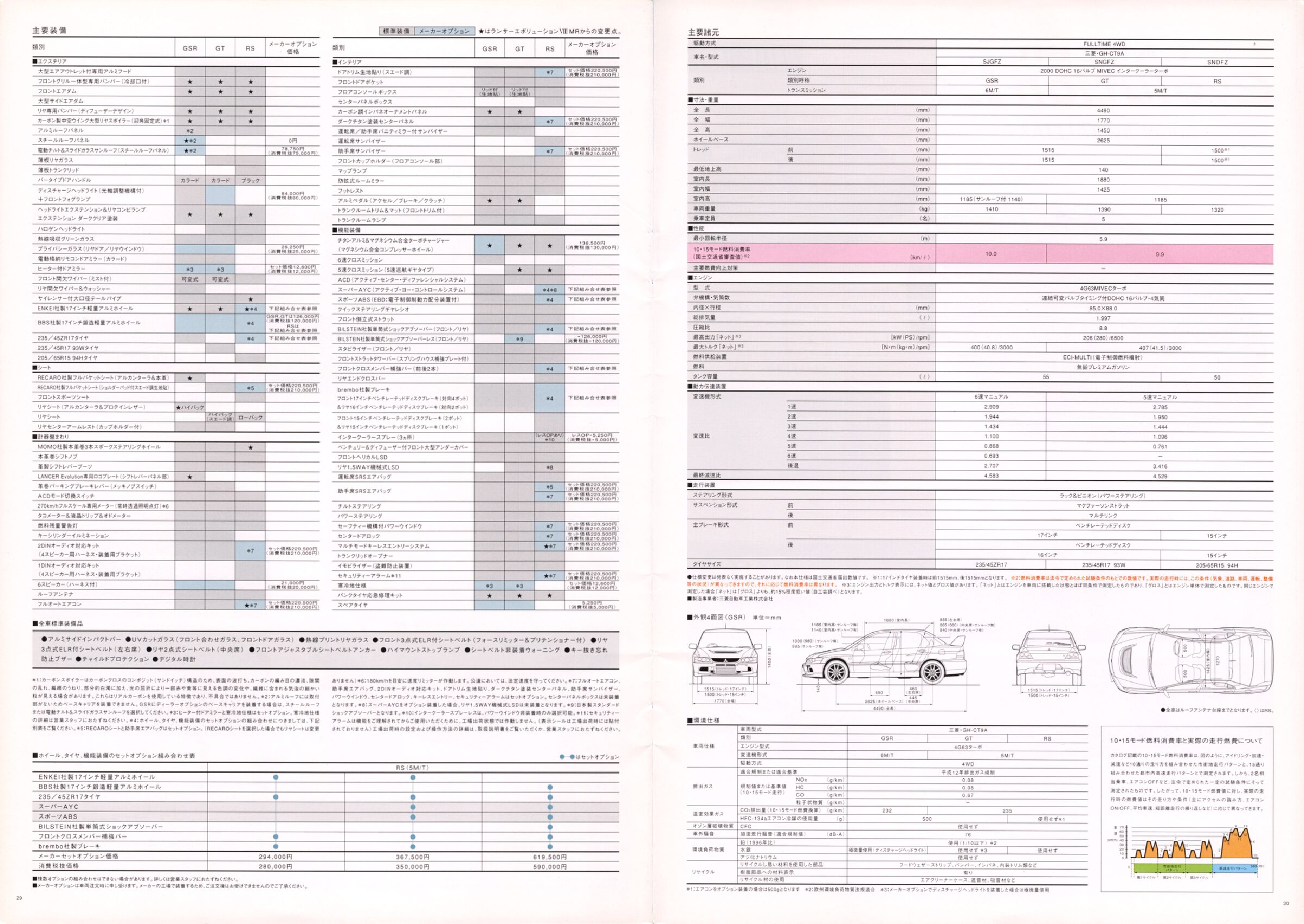
Key: gray = Standard; blue = Maker option; ★ = a change from the Lancer Evolution VIII MR. "—" is not available.
| Item | GSR | GT | RS | Maker option price |
|---|---|---|---|---|
| Exterior | ||||
| Dedicated large aluminum hood with air outlets | Standard | Standard | Standard | |
| Dedicated bumper integrated with the front grille (with cooling openings) | Standard ★ | Standard ★ | Standard ★ | |
| Front air dam | Standard ★ | Standard ★ | Standard ★ | |
| Large side air dams | Standard | Standard | Standard | |
| Dedicated rear bumper (diffuser design) | Standard ★ | Standard ★ | Standard ★ | |
| Large rear spoiler with hollow carbon wing (fixed angle of attack) *1 | Standard ★ | Standard ★ | Standard ★ | |
| Aluminum roof panel | Standard *2 | Standard | Standard | |
| Steel roof panel | Maker option ★*2 | — | — | ¥0 |
| Electric tilt & slide glass sunroof (steel roof panel) | Maker option ★*2 | — | — | ¥78,750 (¥75,000 before consumption tax) |
| Thin rear glass | — | Standard | Standard | |
| Thin trunk lid | — | — | Standard | |
| Bar-type door handles | Standard, colored | Standard, colored | Standard, black | |
| Discharge headlights (with leveling) + front fog lamps | Standard | Maker option | — | ¥84,000 (¥80,000 before consumption tax) |
| Headlight extensions & rear combination lamp extensions, dark clear paint | Standard ★ | Standard ★ | Standard ★ | |
| Halogen headlights | — | Standard | Standard | |
| Heat-absorbing green glass | Standard | Standard | Standard | |
| Privacy glass (rear doors/rear window) | Maker option | Maker option | — | ¥26,250 (¥25,000 before consumption tax) |
| Electric folding remote-control door mirrors (colored) | Standard | Standard | — | |
| Heated door mirrors | Maker option *3 | Maker option *3 | — | Set price ¥12,600 (¥12,000 before consumption tax) |
| Front intermittent wipers (with mist) | Standard, variable | Standard, variable | Standard | |
| Intermittent rear wiper & washer | Standard | Standard | — | |
| Large-bore tailpipe with silencer | Standard | Standard | Standard ★ | |
| ENKEI 17-inch light aluminum wheels | Standard ★ | Standard ★ | Maker option ★*4 | See the combination table below |
| BBS 17-inch forged light aluminum wheels | Maker option | Maker option | Maker option *4 | GSR, GT ¥126,000 (¥120,000 before consumption tax); RS: see the combination table below |
| 235/45ZR17 tires | Standard | — | Maker option *4 | See the combination table below |
| 235/45R17 93W tires | — | Standard | — | |
| 205/65R15 94H tires | — | — | Standard | |
| Seats | ||||
| RECARO full bucket seats (Alcantara & genuine leather) | Standard ★ | — | — | |
| RECARO full bucket seats (suede-look fabric with shoulder pads) | — | Standard | Maker option *5 | Set price ¥220,500 (¥210,000 before consumption tax) |
| Front sports seats | — | — | Standard | |
| Rear seat (Alcantara & protein leather) | Standard ★, high-back | — | — | |
| Rear seat | — | Standard, high-back (suede-look) | Standard, low-back | |
| Rear center armrest (with cup holders) | Standard | Standard | — | |
| Instruments and controls | ||||
| MOMO genuine leather 3-spoke steering wheel | Standard | Standard | Standard ★ | |
| Genuine leather shift knob | Standard | Standard | Standard | |
| Leather shift lever boot | Standard | Standard | Standard | |
| LANCER Evolution logo plate (shift lever panel) | Standard ★ | — | — | |
| Leather parking brake lever (chrome knob switch) | Standard | Standard | Standard | |
| ACD mode switch | Standard | Standard | Standard | |
| Dedicated 270 km/h full-scale meters (always lit, transmitted lighting) *6 | Standard | Standard | Standard | |
| Tachometer & LCD trip & odometer | Standard | Standard | Standard | |
| Low fuel warning lamp | Standard | Standard | Standard | |
| Key cylinder illumination | Standard | Standard | — | |
| 2DIN audio kit (harness for 4 speakers, mounting brackets) | Standard | Standard | Maker option *7 | Set price ¥220,500 (¥210,000 before consumption tax) |
| 1DIN audio kit (harness for 4 speakers, mounting brackets) | — | — | Standard | |
| 6 speakers (with harness) | Maker option | Maker option | — | ¥21,000 (¥20,000 before consumption tax) |
| Roof antenna | Standard | Standard | Standard | |
| Fully automatic air conditioner | Standard | Standard | Maker option ★*7 | Set price ¥220,500 (¥210,000 before consumption tax) |
| Interior | ||||
| Door trim fabric (suede-look) | Standard | Standard | Maker option *7 | Set price ¥220,500 (¥210,000 before consumption tax) |
| Front door pockets | Standard | Standard | Standard | |
| Floor console box | Standard, with lid (fabric-covered) | Standard, with lid (fabric-covered) | Standard | |
| Center panel box | — | — | Standard | |
| Carbon-look instrument panel ornament panel | Standard ★ | Standard ★ | — | |
| Dark titanium painted center panel | Standard | Standard | Maker option *7 | Set price ¥220,500 (¥210,000 before consumption tax) |
| Driver and passenger sun visors with vanity mirrors | Standard | Standard | — | |
| Driver sun visor | — | — | Standard | |
| Passenger sun visor | — | — | Maker option *7 | Set price ¥220,500 (¥210,000 before consumption tax) |
| Front cup holders (floor console) | Standard | Standard | Standard | |
| Map lamp | Standard | Standard | Standard | |
| Anti-glare rear-view mirror | Standard | Standard | Standard | |
| Footrest | Standard | Standard | Standard | |
| Aluminum pedals (accelerator/brake/clutch) | Standard ★ | Standard ★ | — | |
| Trunk room trim & mat (with front trim) | Standard | Standard | Standard | |
| Trunk room lamp | Standard | Standard | Standard | |
| Functional equipment | ||||
| Titanium-aluminum & magnesium alloy turbocharger (magnesium alloy compressor wheel) | Maker option ★ | Standard ★ | Standard ★ | ¥136,500 (¥130,000 before consumption tax) |
| 6-speed close-ratio transmission | Standard | — | — | |
| 5-speed close-ratio transmission (5th-speed cruising gear type) | — | Standard ★ | Standard ★ | |
| ACD (Active Center Differential system) | Standard | Standard | Standard | |
| Super AYC (Active Yaw Control system) | Standard | — | Maker option 48 | See the combination table below |
| Sports ABS (with EBD: electronic brake force distribution) | Standard | Standard | Maker option *4 | See the combination table below |
| Quick steering gear ratio | Standard | Standard | Standard | |
| Front inverted struts | Standard | Standard | Standard | |
| BILSTEIN monotube shock absorbers (front/rear) | Standard | Standard | Maker option *4 | See the combination table below |
| BILSTEIN monotube shock absorber delete (front/rear) | — | Maker option *9 | — | -¥126,000 (-¥120,000 before consumption tax) |
| Stabilizers (front/rear) | Standard | Standard | Standard | |
| Front strut tower bar (with spring house reinforcement plates) | Standard | Standard | Standard | |
| Front crossmember reinforcement bars (2, front and rear) | Standard | Standard | Maker option *4 | See the combination table below |
| Rear end cross bar | — | — | Standard | |
| brembo brakes: front 17-inch ventilated disc brakes (opposed 4-pot) & rear 16-inch ventilated disc brakes (opposed 2-pot) | Standard | Standard | Maker option *4 | See the combination table below |
| Front 15-inch ventilated disc brakes (2-pot) & rear 15-inch ventilated disc brakes (1-pot) | — | — | Standard | |
| Intercooler spray (3 places) | Standard | Standard | Standard (delete option available) *10 | Delete option -¥5,250 (-¥5,000 before consumption tax) |
| Large front under cover with venturi & diffuser | Standard | Standard | Standard | |
| Front helical LSD | Standard | Standard | Standard | |
| Rear 1.5-way mechanical LSD | — | Standard | Standard *8 | |
| Driver SRS airbag | Standard | Standard | Standard | |
| Passenger SRS airbag | Standard | Standard | Maker option *5 / *7 | Set price ¥220,500 (¥210,000 before consumption tax), with either |
| Tilt steering | Standard | Standard | Standard | |
| Power steering | Standard | Standard | Standard | |
| Power windows with safety mechanism | Standard | Standard | Maker option *7 | Set price ¥220,500 (¥210,000 before consumption tax) |
| Central door locking | Standard | Standard | Maker option *7 | Set price ¥220,500 (¥210,000 before consumption tax) |
| Multi-mode keyless entry system | Standard | Standard | Maker option ★*7 | Set price ¥220,500 (¥210,000 before consumption tax) |
| Trunk lid opener | Standard | Standard | Standard | |
| Immobilizer (anti-theft device) | Standard | Standard | Standard | |
| Security alarm *11 | Standard | Standard | Maker option ★*7 | Set price ¥220,500 (¥210,000 before consumption tax) |
| Cold-climate specification | Maker option *3 | Maker option *3 | — | Set price ¥12,600 (¥12,000 before consumption tax) |
| Puncture repair kit | Standard ★ | Standard ★ | Standard ★ | |
| Spare tire | Maker option | Maker option | — | ¥5,250 (¥5,000 before consumption tax) |
*1: The carbon spoiler has a carbon cloth composite (sandwich) structure, so ripples in the surface, light and dark patches and irregular gaps in the carbon weave, waviness of the fibers and partial whitening may be seen, as well as color shifts that look partly red or yellow as light is refracted, and fine air bubbles in the fibers. These are characteristics of real carbon, and not defects. *2: The aluminum roof has no mounting points, so a base carrier cannot be fitted. To fit the dealer-option base carrier to a GSR, please choose the steel roof or the electric tilt & slide glass sunroof. *3: The heated door mirrors and the cold-climate specification are a set option. Please ask our sales staff for details of the cold-climate specification. *4: For the set option combinations of wheels, tires and functional equipment, please see the table below. *5: The RECARO seats and the passenger airbag are a set option. (The rear seat does not change when the RECARO seats are chosen.) *6: A speed limiter works at about 180 km/h. On public roads, please keep to the legal speed limits. *7: The fully automatic air conditioner, passenger airbag, 2DIN audio kit, door trim fabric, dark titanium painted center panel, passenger sun visor, power windows, central door locking, keyless entry and security alarm are a set option. The center panel box is then not fitted. *8: When Super AYC is fitted as an option, the rear 1.5-way mechanical LSD is not fitted. *9: Japanese-made standard shock absorbers are fitted. *10: The intercooler spray delete can be chosen only on cars without power windows. *11: So that the security alarm is used once the functions are understood, it does not work as shipped from the factory. (The display sticker is not fitted at the factory.) For the factory setting and how to operate it, please read the owner's manual or ask our staff.
Parts joined by a line are a set option (each column below).
| RS (5M/T) | Set 1 | Set 2 | Set 3 |
|---|---|---|---|
| ENKEI 17-inch light aluminum wheels | Included | Included | |
| BBS 17-inch forged light aluminum wheels | Included | ||
| 235/45ZR17 tires | Included | Included | Included |
| Super AYC | Included | Included | |
| Sports ABS | Included | Included | |
| BILSTEIN monotube shock absorbers | Included | ||
| Front crossmember reinforcement bars | Included | Included | Included |
| brembo brakes | Included | Included | Included |
| Maker set option price | ¥294,000 | ¥367,500 | ¥619,500 |
| Before consumption tax | ¥280,000 | ¥350,000 | ¥590,000 |
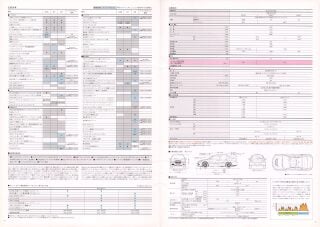
| GSR | GT | RS | |
|---|---|---|---|
| Drive | FULLTIME 4WD | FULLTIME 4WD | FULLTIME 4WD |
| Car name and model | Mitsubishi GH-CT9A | Mitsubishi GH-CT9A | Mitsubishi GH-CT9A |
| Model code | SJGFZ | SNGFZ | SNDFZ |
| Engine | 2000 DOHC 16-valve MIVEC intercooler turbo | 2000 DOHC 16-valve MIVEC intercooler turbo | 2000 DOHC 16-valve MIVEC intercooler turbo |
| Grade | GSR | GT | RS |
| Transmission | 6M/T | 5M/T | 5M/T |
| Dimensions and weight | |||
| Overall length (mm) | 4490 | 4490 | 4490 |
| Overall width (mm) | 1770 | 1770 | 1770 |
| Overall height (mm) | 1450 | 1450 | 1450 |
| Wheelbase (mm) | 2625 | 2625 | 2625 |
| Track, front (mm) | 1515 | 1515 | 1500 ※1 |
| Track, rear (mm) | 1515 | 1515 | 1500 ※1 |
| Minimum ground clearance (mm) | 140 | 140 | 140 |
| Interior length (mm) | 1880 | 1880 | 1880 |
| Interior width (mm) | 1425 | 1425 | 1425 |
| Interior height (mm) | 1185 (1140 with sunroof) | 1185 | 1185 |
| Vehicle weight (kg) | 1410 | 1390 | 1320 |
| Seating capacity | 5 | 5 | 5 |
| Performance | |||
| Minimum turning radius (m) | 5.9 | 5.9 | 5.9 |
| 10-15 mode fuel consumption (Ministry of Land, Infrastructure and Transport figure) ※2 (km/L) | 10.0 | 9.9 | 9.9 |
| Main fuel economy measures | — | — | — |
| Engine | |||
| Type | 4G63 MIVEC turbo | 4G63 MIVEC turbo | 4G63 MIVEC turbo |
| Valve gear and cylinders | DOHC 16-valve with continuous variable valve timing, 4 cylinders | DOHC 16-valve with continuous variable valve timing, 4 cylinders | DOHC 16-valve with continuous variable valve timing, 4 cylinders |
| Bore × stroke (mm) | 85.0×88.0 | 85.0×88.0 | 85.0×88.0 |
| Displacement (L) | 1.997 | 1.997 | 1.997 |
| Compression ratio | 8.8 | 8.8 | 8.8 |
| Maximum output, net ※3 (kW (PS)/rpm) | 206 (280)/6500 | 206 (280)/6500 | 206 (280)/6500 |
| Maximum torque, net ※3 (N·m (kg·m)/rpm) | 400 (40.8)/3000 | 407 (41.5)/3000 | 407 (41.5)/3000 |
| Fuel system | ECI-MULTI (electronically controlled fuel injection) | ECI-MULTI (electronically controlled fuel injection) | ECI-MULTI (electronically controlled fuel injection) |
| Fuel | Unleaded premium gasoline | Unleaded premium gasoline | Unleaded premium gasoline |
| Tank capacity (L) | 55 | 55 | 50 |
| Drivetrain | |||
| Transmission type | 6-speed manual | 5-speed manual | 5-speed manual |
| Gear ratio, 1st | 2.909 | 2.785 | 2.785 |
| Gear ratio, 2nd | 1.944 | 1.950 | 1.950 |
| Gear ratio, 3rd | 1.434 | 1.444 | 1.444 |
| Gear ratio, 4th | 1.100 | 1.096 | 1.096 |
| Gear ratio, 5th | 0.868 | 0.761 | 0.761 |
| Gear ratio, 6th | 0.693 | — | — |
| Gear ratio, reverse | 2.707 | 3.416 | 3.416 |
| Final drive ratio | 4.583 | 4.529 | 4.529 |
| Running gear | |||
| Steering | Rack & pinion (power steering) | Rack & pinion (power steering) | Rack & pinion (power steering) |
| Suspension, front | MacPherson strut | MacPherson strut | MacPherson strut |
| Suspension, rear | Multi-link | Multi-link | Multi-link |
| Main brakes, front | Ventilated disc, 17-inch | Ventilated disc, 17-inch | Ventilated disc, 15-inch |
| Main brakes, rear | Ventilated disc, 16-inch | Ventilated disc, 16-inch | Ventilated disc, 15-inch |
| Tire size | 235/45ZR17 | 235/45R17 93W | 205/65R15 94H |
※1: With 17-inch tires fitted, front 1515 mm and rear 1515 mm. ※2: Fuel consumption figures are values under test conditions set by law. In actual driving they differ with conditions (weather, roads, vehicle, driving, maintenance and so on), and fuel consumption differs accordingly. ※3: Engine output and torque can be shown as net or gross figures. "Net" is measured with the engine in nearly the same state as when mounted in the car, and "gross" with the engine alone. Measured on the same engine, "net" is about 15% lower than "gross" (JAMA research).
The drawings are labeled:
| GSR | GT | RS | ||
|---|---|---|---|---|
| Vehicle | Model | Mitsubishi GH-CT9A | Mitsubishi GH-CT9A | Mitsubishi GH-CT9A |
| Vehicle | Grade | GSR | GT | RS |
| Vehicle | Engine type | 4G63 turbo | 4G63 turbo | 4G63 turbo |
| Vehicle | Transmission type | 6M/T | 5M/T | 5M/T |
| Vehicle | Drive | 4WD | 4WD | 4WD |
| Exhaust gas | Regulation or standard met | 2000 (Heisei 12) exhaust emission regulations | 2000 (Heisei 12) exhaust emission regulations | 2000 (Heisei 12) exhaust emission regulations |
| Exhaust gas | Limit or standard (10-15 mode), NOx (g/km) | 0.08 | 0.08 | 0.08 |
| Exhaust gas | Limit or standard (10-15 mode), HC (g/km) | 0.08 | 0.08 | 0.08 |
| Exhaust gas | Limit or standard (10-15 mode), CO (g/km) | 0.67 | 0.67 | 0.67 |
| Exhaust gas | Limit or standard (10-15 mode), particulate matter (g/km) | — | — | — |
| Greenhouse gases | CO2 emissions (10-15 mode fuel consumption converted) (g/km) | 232 | 235 | 235 |
| Greenhouse gases | HFC-134a air conditioner refrigerant used (g) | 500 | 500 | Not used *1 |
| Ozone-depleting substances | CFC | Not used | Not used | Not used |
| Exterior noise | Acceleration noise (regulation limit) (dB-A) | 76 | 76 | 76 |
| Substances of environmental concern | Lead (compared with 1996) | Used (1/10 or less) *2 | Used (1/10 or less) *2 | Used (1/10 or less) *2 |
| Substances of environmental concern | Mercury | Very small amount used (discharge headlights) | Not used *3 | Not used |
| Substances of environmental concern | Sodium azide | Not used | Not used | Not used |
| Recycling | Parts using easily recycled materials | Hood weatherstrip, bumpers, instrument panel, interior trim and more | Hood weatherstrip, bumpers, instrument panel, interior trim and more | Hood weatherstrip, bumpers, instrument panel, interior trim and more |
| Recycling | Material marking on resin parts | Yes | Yes | Yes |
| Recycling | Use of recycled materials | Air cleaner case, sound insulation, sound absorbing material and more | Air cleaner case, sound insulation, sound absorbing material and more | Air cleaner case, sound insulation, sound absorbing material and more |
*1: 500 g when the air conditioner is fitted as an option. *2: Meets the EU directive on substances of environmental concern. *3: A very small amount is used when discharge headlights are fitted as a maker option.
The 10-15 mode fuel consumption in the catalog is measured, as the chart shows, with an urban driving pattern combining 10 ways of driving such as idling, acceleration and deceleration, and an urban high-speed driving pattern combining 15. It is also measured under fixed test conditions set by law, such as a load equal to two occupants and the air conditioner off. Actual fuel consumption therefore differs from the 10-15 mode figure with the way of driving and the conditions (mainly how the accelerator is pressed, air conditioner on or off, average speed, repeated short trips and so on).
The chart is labeled:
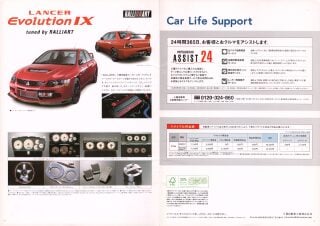
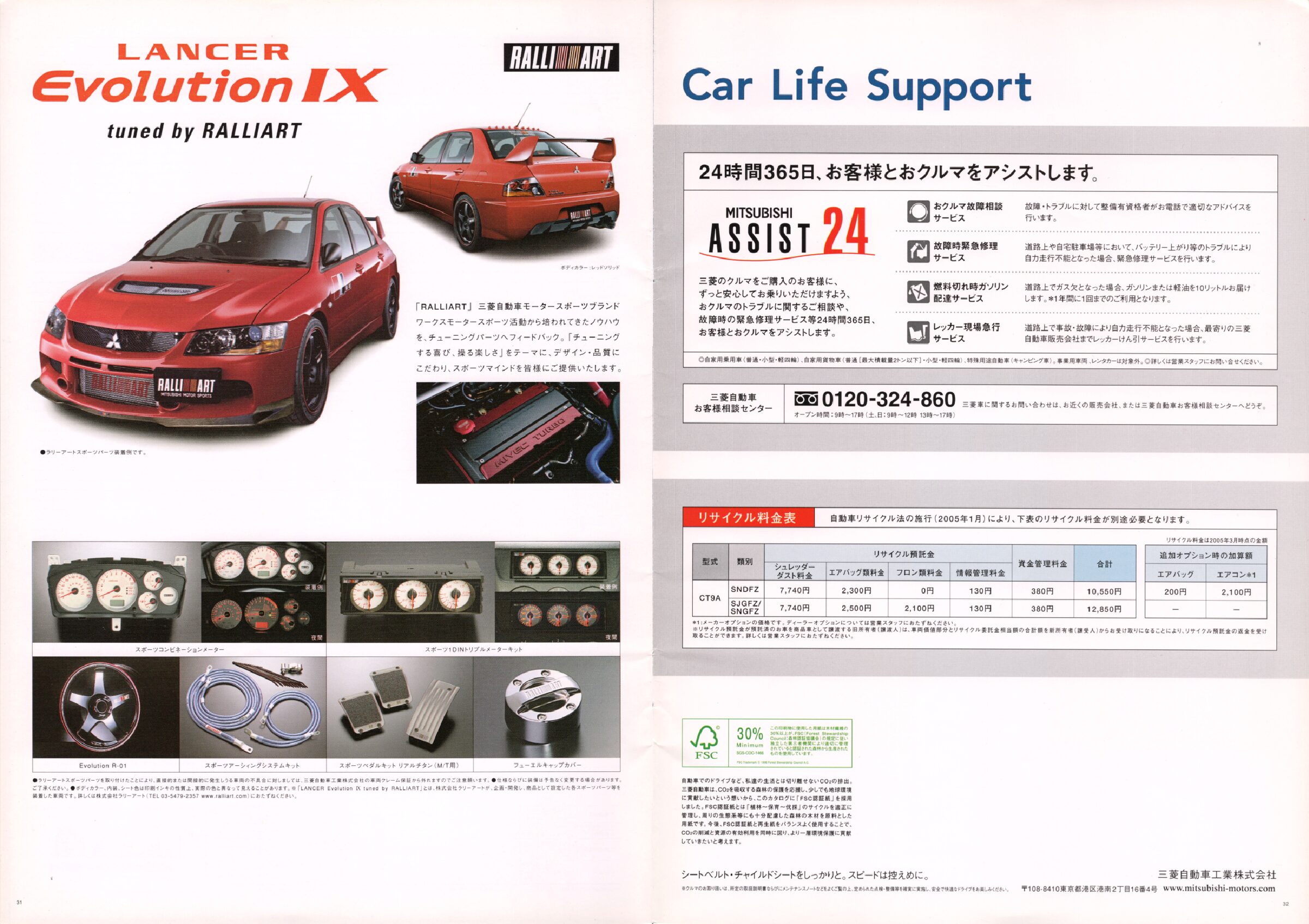
Body color: Red Solid
"RALLIART": Mitsubishi Motors' motorsport brand. The know-how built up through works motorsport activities is fed back into tuning parts. With "the joy of tuning, the pleasure of driving" as the theme, and care for design and quality, it brings the sporting spirit to everyone.
The parts pictured:
※ "LANCER Evolution IX tuned by RALLIART" is a car fitted with sports parts planned, developed and offered as products by RALLIART Inc. For details, please ask RALLIART Inc. (TEL 03-5479-2357, www.ralliart.com).
MITSUBISHI ASSIST 24
So that customers who buy a Mitsubishi car can drive with peace of mind for as long as they own it, we assist you and your car 24 hours a day, 365 days a year, with advice on car trouble, emergency repairs in a breakdown and more.
| Service | What it does |
|---|---|
| Car breakdown advice service | A qualified mechanic gives the right advice by phone on breakdowns and trouble. |
| Emergency breakdown repair service | When the car cannot be driven because of trouble such as a flat battery, on the road or in your home parking space, an emergency repair service is provided. |
| Gasoline delivery when out of fuel | When you run out of fuel on the road, 10 liters of gasoline or diesel are delivered. *Once a year only. |
| Emergency tow truck service | When the car cannot be driven after an accident or breakdown on the road, it is towed to the nearest Mitsubishi dealer. |
◎ Private passenger cars (standard, small and kei 4-wheel), private commercial vehicles (standard [maximum load 2 tons or less], small and kei 4-wheel) and special-purpose vehicles (camping cars). Business vehicles and rental cars are not covered. ◎ Please ask our sales staff for details.
0120-324-860 (toll-free)
Open 9:00 to 17:00 (Saturday and Sunday 9:00 to 12:00 and 13:00 to 17:00)
For any question about a Mitsubishi car, please contact your nearest dealer or the Mitsubishi Motors Customer Center.
With the Automobile Recycling Law in force (January 2005), the recycling fees in the table below are charged separately.
Recycling fees as of March 2005.
| Model | Code | Recycling deposit: shredder dust fee | Recycling deposit: airbag fee | Recycling deposit: CFC fee | Recycling deposit: information management fee | Fund management fee | Total | Added with option: airbag | Added with option: air conditioner *1 |
|---|---|---|---|---|---|---|---|---|---|
| CT9A | SNDFZ | ¥7,740 | ¥2,300 | ¥0 | ¥130 | ¥380 | ¥10,550 | ¥200 | ¥2,100 |
| CT9A | SJGFZ/SNGFZ | ¥7,740 | ¥2,500 | ¥2,100 | ¥130 | ¥380 | ¥12,850 | — | — |
*1: The price for the maker option. Please ask our sales staff about dealer options.
※ When a car whose recycling deposit has been paid is sold as a used car, the previous owner (seller) receives the total of the car's value and an amount equal to the recycling deposit from the new owner (buyer), and so can get back the recycling deposit. Please ask our sales staff for details.
30% Minimum. SGS-COC-1466. The paper used in this printed matter is at least 30% wood fiber from forests certified, under the rules of the FSC (Forest Stewardship Council), by an independent third party as properly managed. FSC Trademark © 1996 Forest Stewardship Council A.C.
Driving a car and much of our daily life cannot be separated from emitting CO2. Wishing to support the protection of forests, which absorb CO2, and so contribute even a little to the global environment, Mitsubishi Motors has used "FSC-certified paper" for this catalog. FSC-certified paper is made from the wood of forests where the cycle of "planting, tending, harvesting" is properly managed with full care for the surrounding ecosystem. From now on, by using FSC-certified paper and recycled paper in good balance, we intend to reduce CO2 and use resources effectively at the same time, contributing further to protecting the environment.
Fasten seat belts and child seats securely. Keep your speed down.
※ When handling your car, please read the owner's manual and maintenance notes carefully, carry out the specified inspections and maintenance without fail, and enjoy safe, comfortable driving.
Mitsubishi Motors Corporation
2-16-4 Konan, Minato-ku, Tokyo 108-8410
www.mitsubishi-motors.com
MITSUBISHI MOTORS
3SXGA8A053 (05-04)
Mitsubishi's Japanese brochure for the CT9A Lancer Evolution IX, printed in April 2005, covering the GSR, GT and RS with the engine, All Wheel Control, body, equipment, colors, list prices and specifications, and the Lancer Evolution IX tuned by RALLIART.
Reproduced for archival and reference purposes. Mitsubishi, its model names, logos and the images in this brochure are the trademarks and copyright of their owners; NENGUN is not affiliated with or endorsed by Mitsubishi. If you hold rights in this material and object to it appearing here, contact us and we will remove it promptly.