Usually ships from Japan by 14 Dec, based on part orders
Lead times are how long the manufacturer takes to send a part to our warehouse. Made to order parts are made for you after you order. Learn more: how lead times work
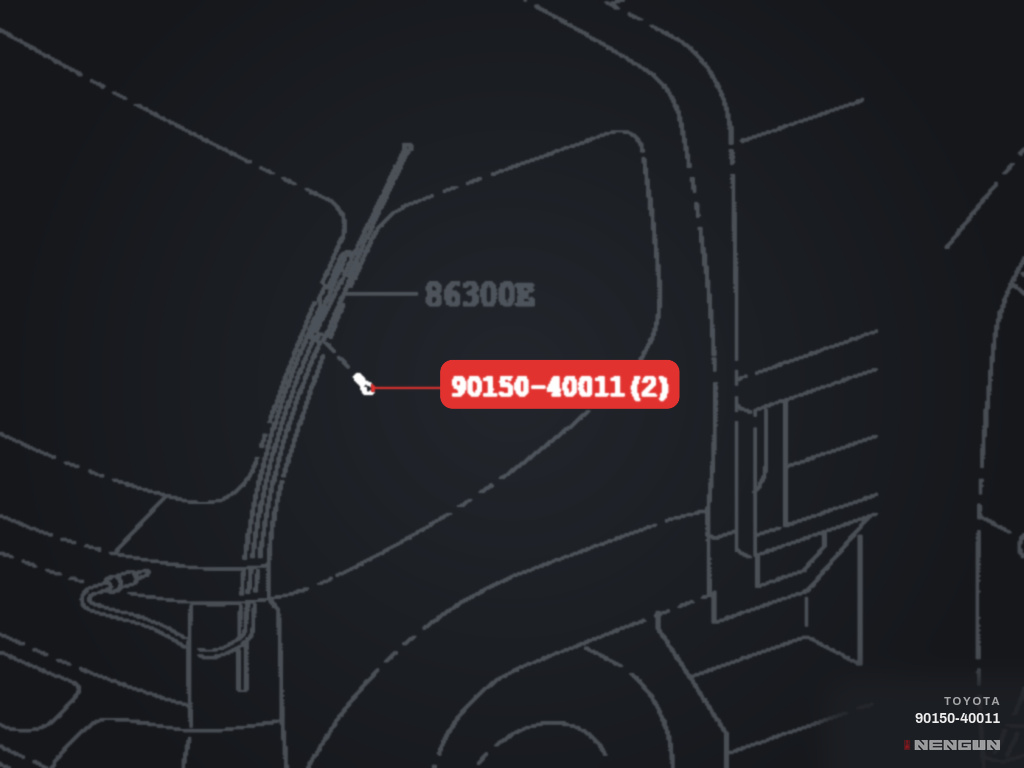
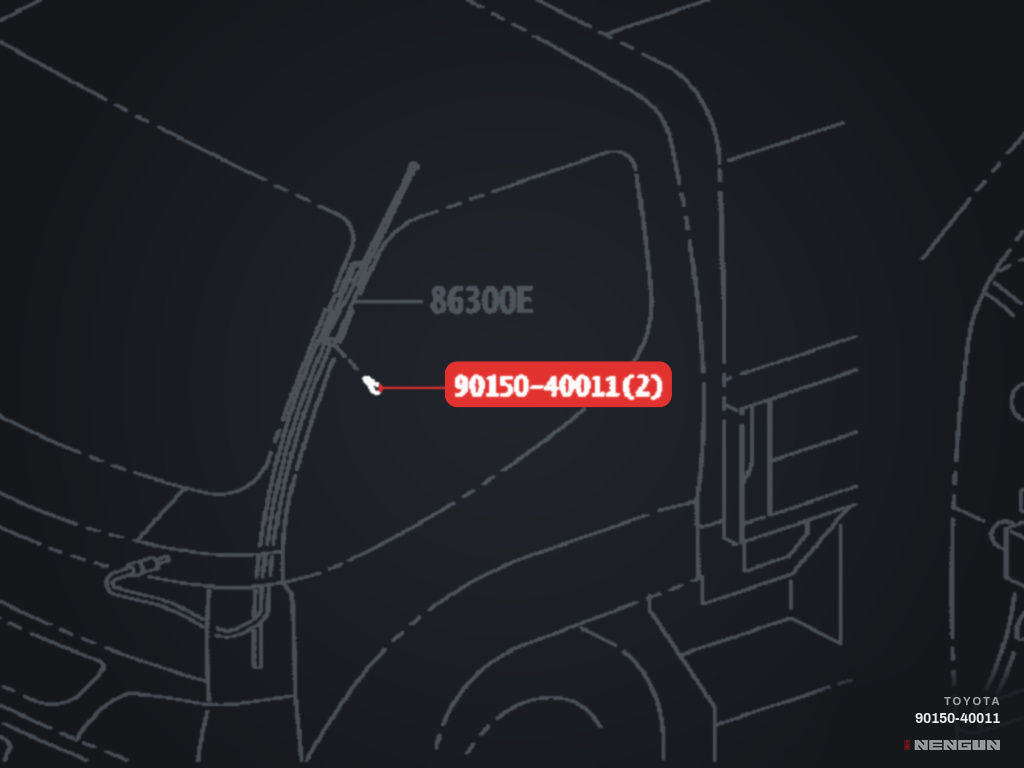
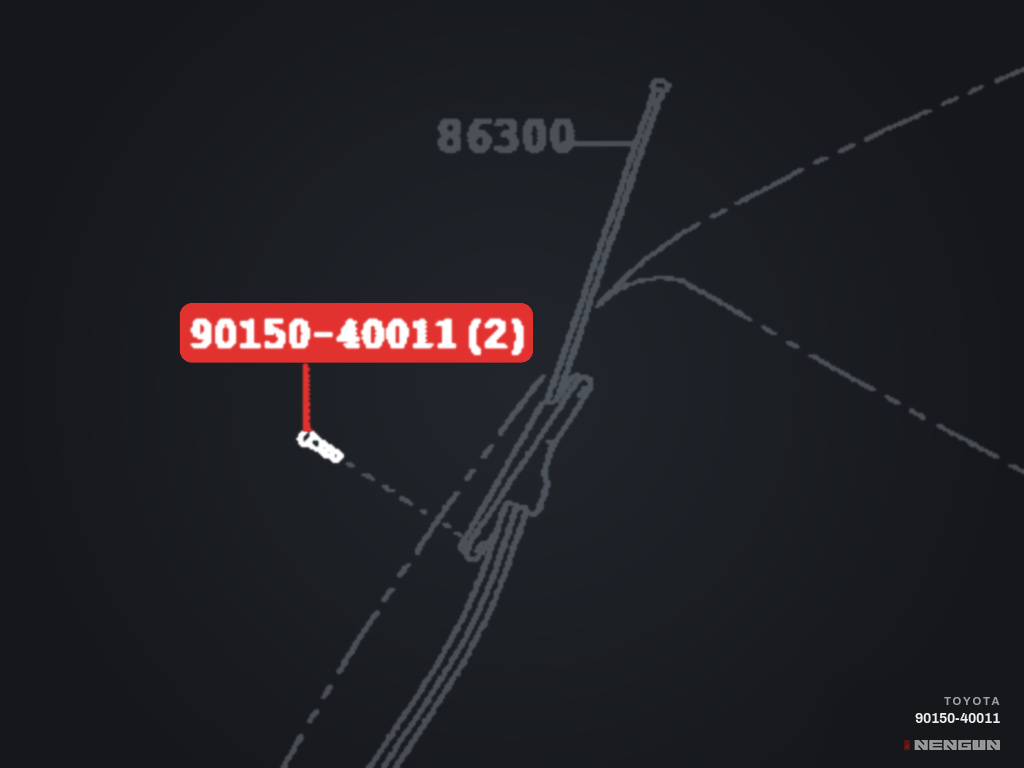
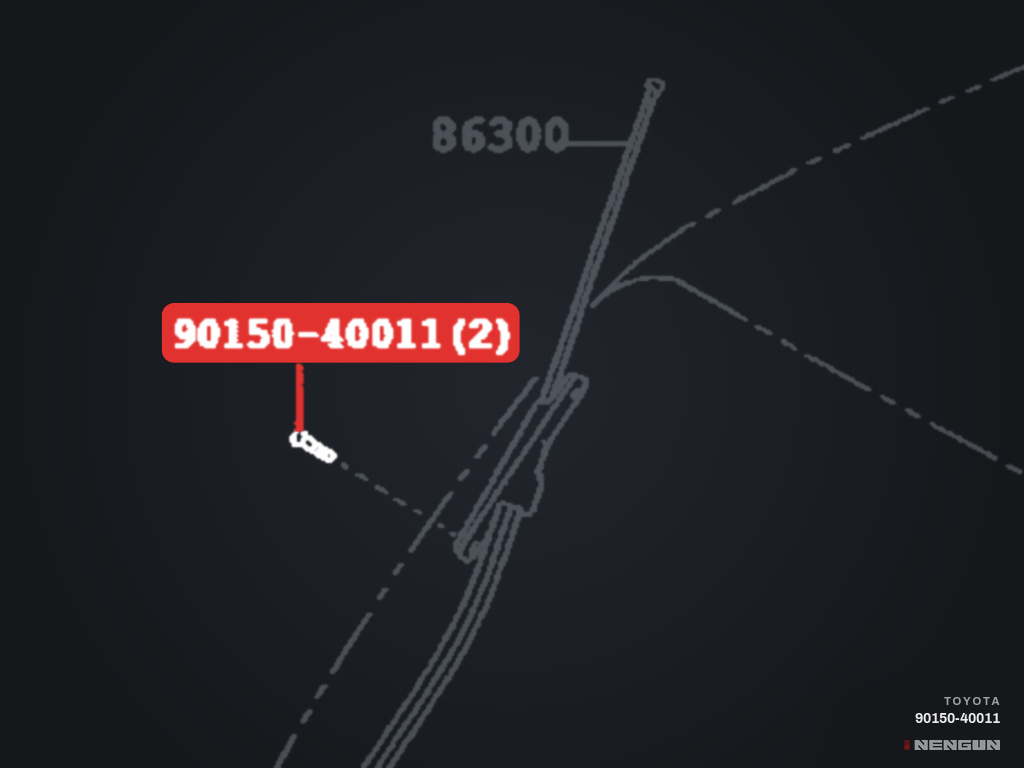
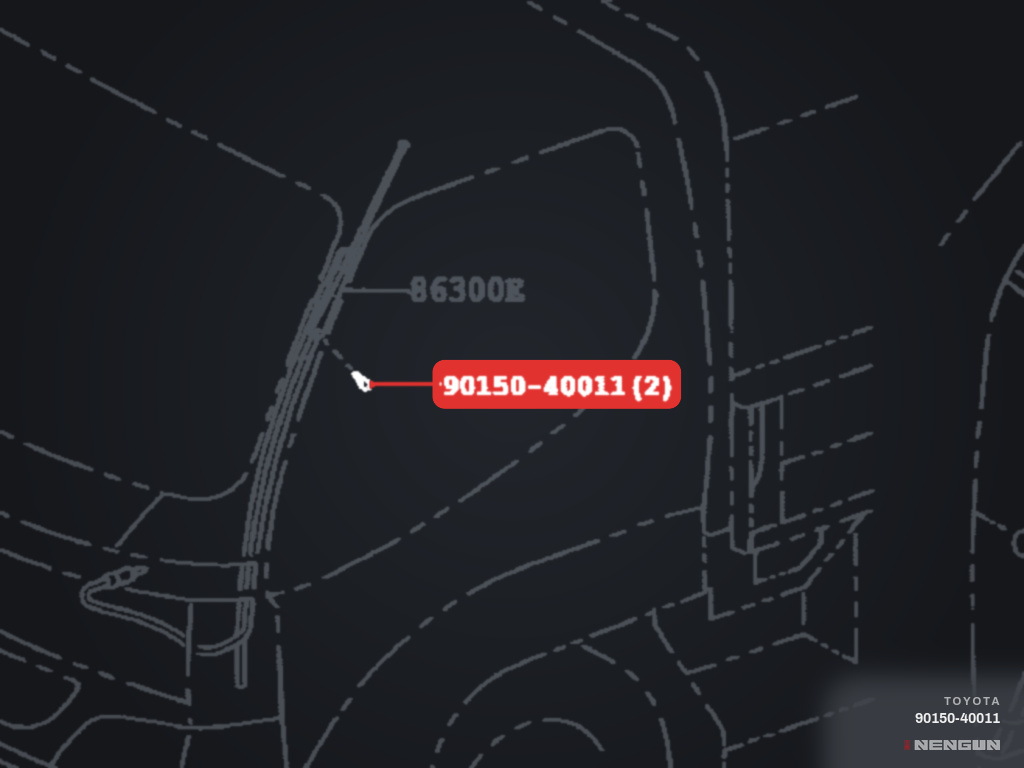
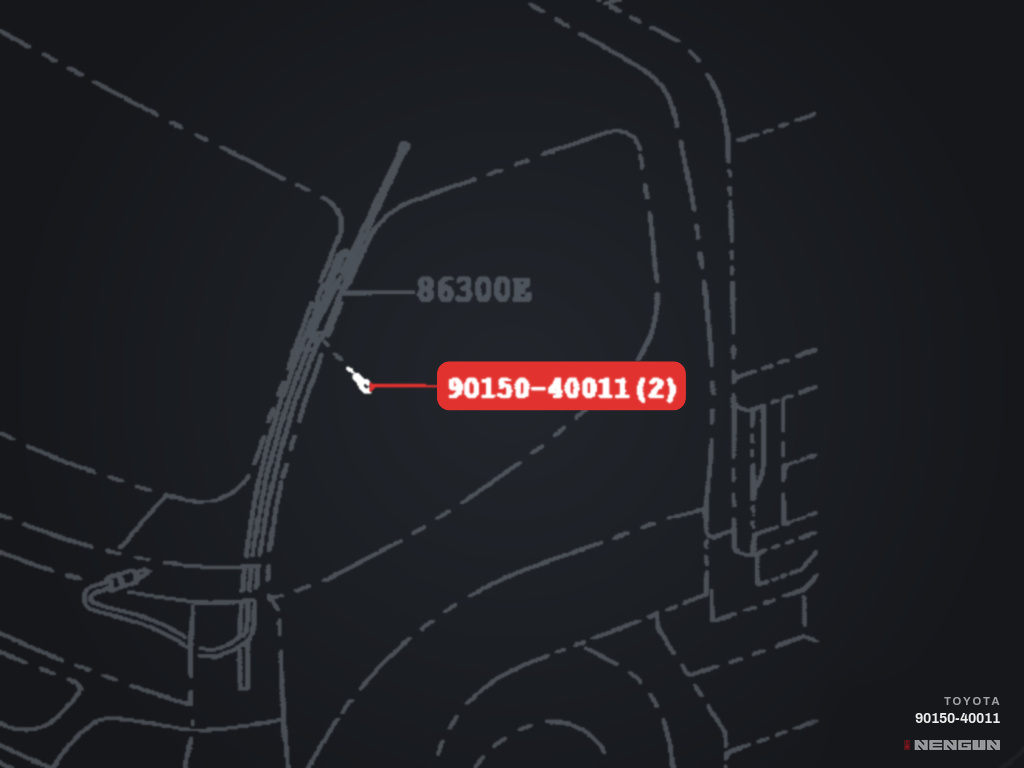
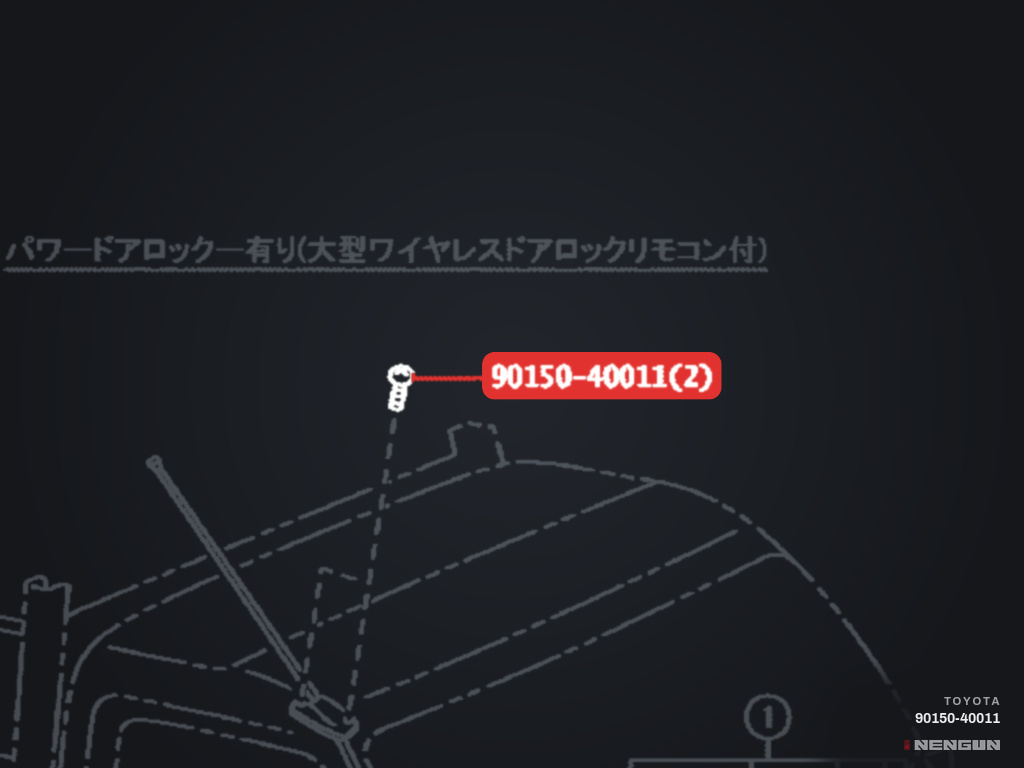
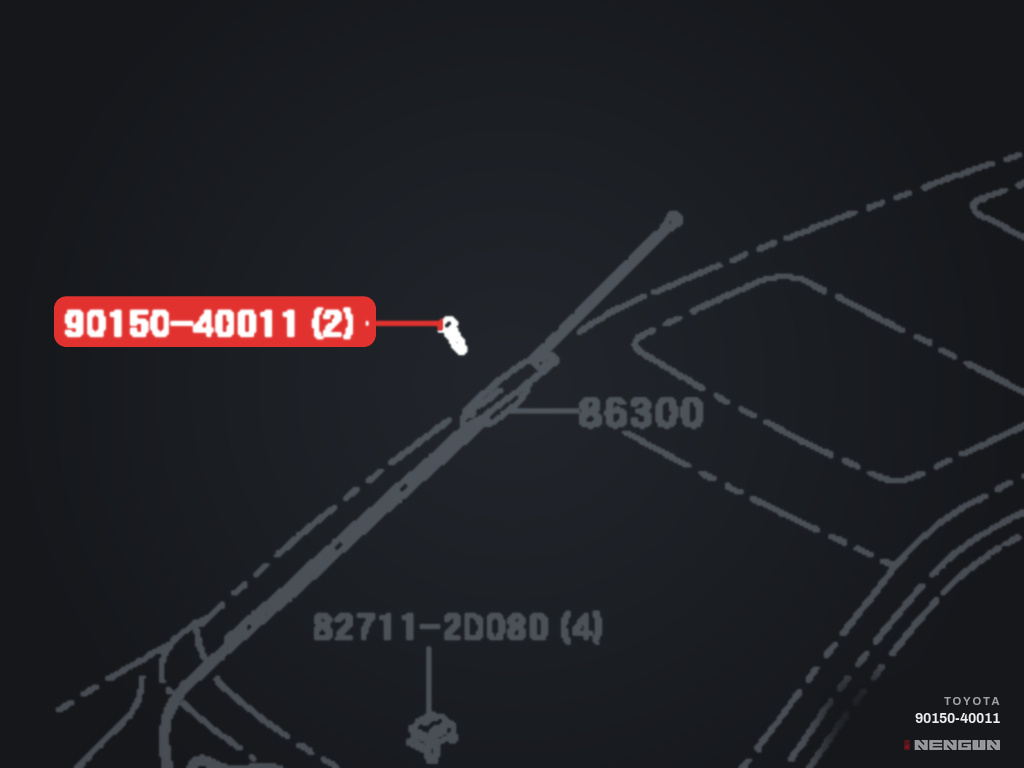
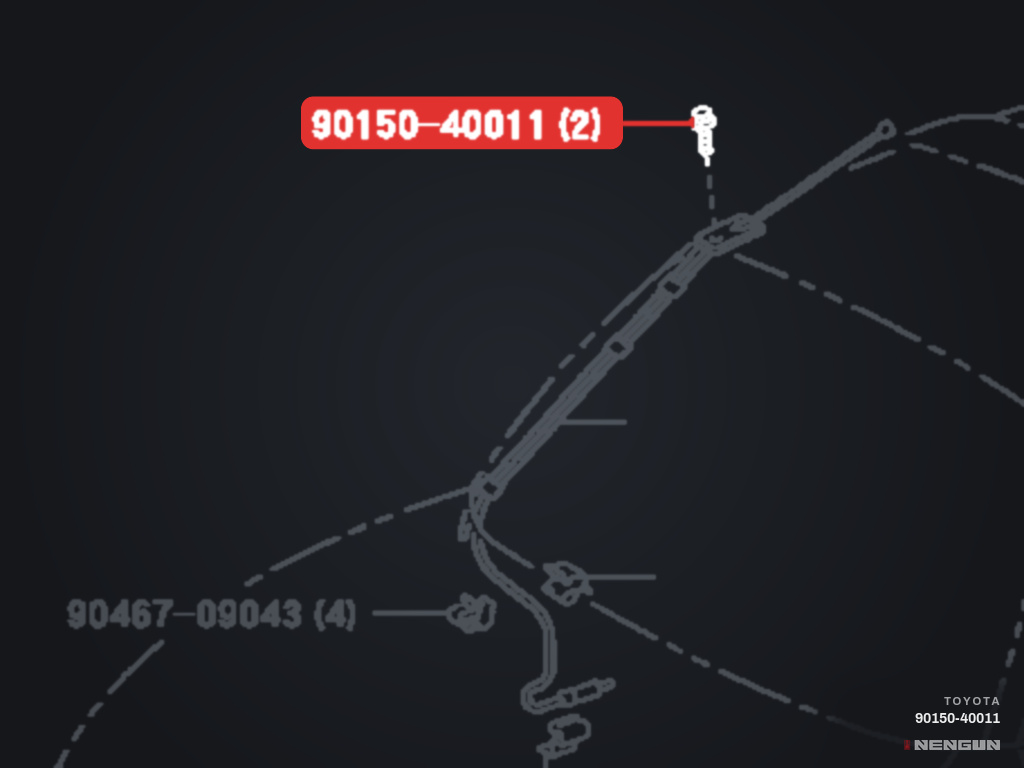
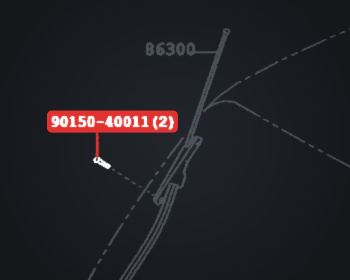
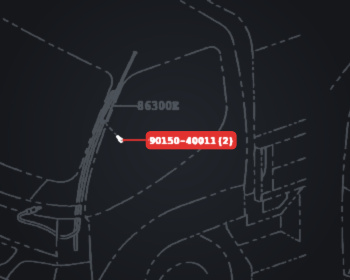
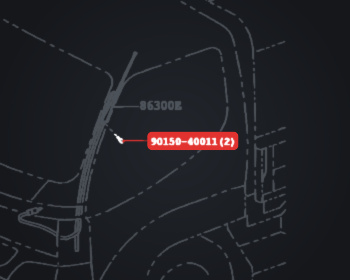
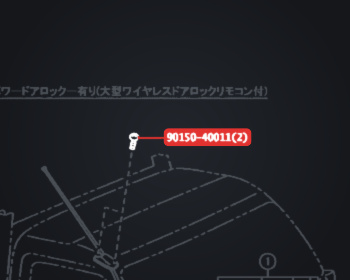
From Toyota's Security, Anti-theft Alarm System diagram, the part outlined: 10 drawings. Double-tap to zoom

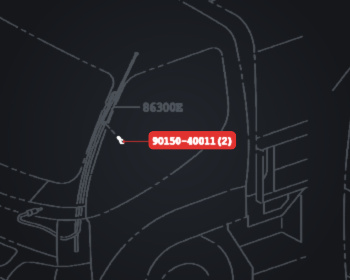
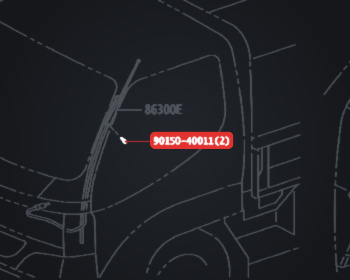
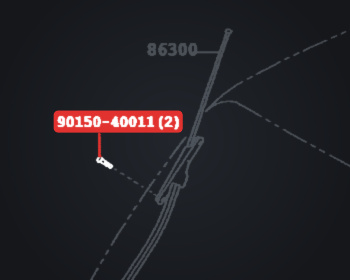
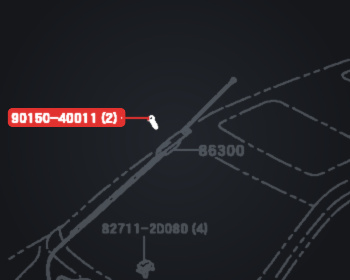
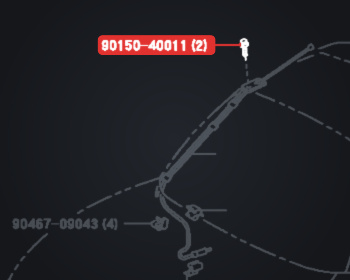
 Toyota Genuine part
Bolt
90150-40011, 9015040011
Toyota part 90150-40011 is also known as ** Std Part
Genuine Toyota OEM Bolt 90150-40011 can be purchased and shipped direct from Japan to anywhere worldwide.
USD $ 1.03163 JPYUSD is indicative only, payments are charged in Japanese Yen. Learn more: how prices in other currencies work
Fast tracked shipping to the United States Add parts to your shopping cart and check out to select from shipping options. Learn more: how shipping works
Genuine Toyota from Japan, never a fake, copy or replica
Fits these cars
41 cars /
| Car | Years | Engine | Diagram | Catalog |
|---|---|---|---|---|
| Carina AT212 1 configuration 5AFE | 1997 | 5AFE | Antenna | Open catalog for the Carina AT212 |
| Carina CT211 1 configuration 3CTE | 2000 | 3CTE | Antenna | Open catalog for the Carina CT211 |
| Corolla AE115N 1 configuration 7AFE | 1998 | 7AFE | Antenna | Open catalog for the Corolla AE115N |
| Corona CT210 1 configuration 2CT | 1996 | 2CT | Antenna | Open catalog for the Corona CT210 |
| Dyna KDY220 5 configurations 2KDFTV | 2004–2007 | 2KDFTV | Security, Anti-theft Alarm System | Open catalog for the Dyna KDY220 |
| Dyna KDY221 3 configurations 1KDFTV | 2011–2013 | 1KDFTV | Wireless Door Lock · Security, Anti-theft Alarm System · Antenna | Open catalog for the Dyna KDY221 |
| Dyna KDY230 1 configuration 2KDFTV | 2006 | 2KDFTV | Security, Anti-theft Alarm System | Open catalog for the Dyna KDY230 |
| Dyna KDY271 1 configuration 1KDFTV | 2012 | 1KDFTV | Security, Anti-theft Alarm System | Open catalog for the Dyna KDY271 |
| Dyna KDY280 1 configuration 2KDFTV | 2005 | 2KDFTV | Security, Anti-theft Alarm System | Open catalog for the Dyna KDY280 |
| Dyna KDY281 17 configurations 1KDFTV | 2007–2015 | 1KDFTV | Security, Anti-theft Alarm System · Antenna | Open catalog for the Dyna KDY281 |
| Dyna LY270 2 configurations 5L | 2002–2004 | 5L | Security, Anti-theft Alarm System | Open catalog for the Dyna LY270 |
| Dyna TRY231 1 configuration 1TRFPE | 2013 | 1TRFPE | Security, Anti-theft Alarm System | Open catalog for the Dyna TRY231 |
| Dyna XZU302D 1 configuration S05C | 2004 | S05C | Security, Anti-theft Alarm System | Open catalog for the Dyna XZU302D |
| Dyna XZU304A 1 configuration N04C | 2003 | N04C | Antenna | Open catalog for the Dyna XZU304A |
| Dyna XZU306 7 configurations S05D | 1999–2006 | S05D | Security, Anti-theft Alarm System · Antenna | Open catalog for the Dyna XZU306 |
| Dyna XZU306V 2 configurations S05D | 2005–2006 | S05D | Security, Anti-theft Alarm System | Open catalog for the Dyna XZU306V |
| Dyna XZU307 6 configurations S05C | 1999–2003 | S05C | Security, Anti-theft Alarm System | Open catalog for the Dyna XZU307 |
| Dyna XZU314D 1 configuration N04C | 2006 | N04C | Antenna | Open catalog for the Dyna XZU314D |
| Dyna XZU338 1 configuration N04C | 2006 | N04C | Security, Anti-theft Alarm System | Open catalog for the Dyna XZU338 |
| Dyna XZU340 1 configuration J05C | 2002 | J05C | Wireless Door Lock | Open catalog for the Dyna XZU340 |
| Dyna XZU348 1 configuration N04C | 2005 | N04C | Security, Anti-theft Alarm System | Open catalog for the Dyna XZU348 |
| Dyna XZU352D 1 configuration S05C | 2004 | S05C | Antenna | Open catalog for the Dyna XZU352D |
| Dyna XZU382 1 configuration S05C | 1999 | S05C | Security, Anti-theft Alarm System | Open catalog for the Dyna XZU382 |
| Dyna XZU388 5 configurations N04C | 2004–2006 | N04C | Security, Anti-theft Alarm System | Open catalog for the Dyna XZU388 |
| Dyna XZU401 1 configuration S05D | 1999 | S05D | Security, Anti-theft Alarm System | Open catalog for the Dyna XZU401 |
| Dyna XZU412 11 configurations S05C, 15BCNG | 1999–2004 | S05C, 15BCNG | Security, Anti-theft Alarm System | Open catalog for the Dyna XZU412 |
| Dyna XZU415 1 configuration N04C | 2006 | N04C | Security, Anti-theft Alarm System | Open catalog for the Dyna XZU415 |
| Dyna XZU421 1 configuration S05D | 1999 | S05D | Security, Anti-theft Alarm System | Open catalog for the Dyna XZU421 |
| Dyna XZU424 5 configurations N04C | 2004–2011 | N04C | Wireless Door Lock · Security, Anti-theft Alarm System · Antenna | Open catalog for the Dyna XZU424 |
| Dyna XZU433 1 configuration J05D | 2005 | J05D | Wireless Door Lock | Open catalog for the Dyna XZU433 |
| Dyna XZU700A 1 configuration N04C | 2017 | N04C | Antenna | Open catalog for the Dyna XZU700A |
| Dyna XZU720 2 configurations N04C | 2015–2017 | N04C | Antenna | Open catalog for the Dyna XZU720 |
| Dyna XZU730 1 configuration N04C | 2014 | N04C | Antenna | Open catalog for the Dyna XZU730 |
| Estima ACR30W 1 configuration 2AZFE | 2003 | 2AZFE | Antenna | Open catalog for the Estima ACR30W |
| Estima ACR40W 1 configuration 2AZFE | 2002 | 2AZFE | Antenna | Open catalog for the Estima ACR40W |
| Nadia ACN10 2 configurations 1AZFSE | 2001–2002 | 1AZFSE | Antenna | Open catalog for the Nadia ACN10 |
| Nadia SXN10 2 configurations 3SFSE, 3SFE | 2001 | 3SFSE, 3SFE | Antenna | Open catalog for the Nadia SXN10 |
| Probox NCP160V 1 configuration 1NZFE | 2014 | 1NZFE | Antenna | Open catalog for the Probox NCP160V |
| RAV4 SXA10C 2 configurations 3SFE | 1998 | 3SFE | Antenna | Open catalog for the RAV4 SXA10C |
| RAV4 SXA10G 4 configurations 3SFE | 1994–1999 | 3SFE | Antenna | Open catalog for the RAV4 SXA10G |
| RAV4 SXA10W 1 configuration 3SFE | 1999 | 3SFE | Antenna | Open catalog for the RAV4 SXA10W |
No car matches "". Ask our OEM team whether it fits yours.
Fitment is from Toyota's catalogs: open your car's catalog to see the part on the diagram, or ask our OEM team before you order.
QuestionsMore in our Help Center
Will this part fit my vehicle?
NENGUN has access to the full catalogue of available parts from the Japanese OEM manufacturers, such as Nissan, Toyota, Mitsubishi, Subaru, Honda and more. NENGUN’s catalogs primarily cover parts for right-hand-drive (RHD) vehicles common in Japan, reflecting the standard vehicle specifications in the Japanese market.
The compatibility and fitment to your vehicle is best confirmed by browsing the OEM catalogue correctly and not just ordering a part number without confirmation. See the Getting Started section for more information on OEM part selection. Additionally, if you own a left-hand-drive (LHD) vehicle, it is crucial to independently confirm compatibility, as NENGUN catalogs do not include LHD-specific parts. Steps to verify compatibility include identifying the exact LHD part number and comparing it to RHD part numbers in the catalog.
If you are not able to confirm fitment through the OEM catalogues, please check with your mechanic, tuner or dealer to confirm the correct part number for your vehicle specification. OEM parts can vary between regions and vehicle specification and it is not recommended to assume a part from a similar vehicle will fit your vehicle. For discontinued parts, consider using online marketplaces, specialty dealers, or exploring aftermarket alternative options, ensuring quality and compatibility. For instance, Toyota part number 69005-42020 is a discontinued item that may require these approaches to locate.
Purchased OEM parts that do not fit your vehicle will be subject to the returns conditions and restocking fees. See Returns help for more information.
Are OEM parts genuine manufacturer new parts?
NENGUN has access to the full catalogue of available parts from the Japanese OEM manufacturers, such as Nissan, Toyota, Mitsubishi, Subaru, Honda and more. These parts are sourced directly from the manufacturer’s facilities in Japan.
All of the parts are 100% genuine, supplied directly from the OEM manufacturers in Japan and then shipped to you. Parts are ordered upon customer purchase to ensure that you receive the most up-to-date components.
We do not supply copy, replica or equivalent parts in substitution from other manufacturers.
All OEM parts feature the manufacturer OEM part number stickers and boxes to assure you of their genuine quality. However, NENGUN is unable to provide photographs or details of lens markings if parts are not currently in stock.
Compliance with International Certification
NENGUN cannot confirm whether the OEM tail lights meet specific country or region certification requirements, such as the New Zealand Transport Agency (NZTA) regulations. Vehicles and parts in Japan may adhere to Japanese safety norms, and customers are encouraged to confirm compliance requirements with local authorities rather than assume compatibility.
Policy on Specific Physical Details
Since all parts are ordered directly from the manufacturer, NENGUN cannot provide physical details unless the products are already in their facilities. Lens marking photographs, for instance, can only be retrieved after the items are delivered; for certification details, customers should seek verification locally or through third parties.
Customer Guidance
- All OEM parts sold by NENGUN are genuine and sourced directly from manufacturers in Japan.
- Customers should confirm compliance with local certification before purchase.
- Details such as lens markings may not be available unless the items are in stock.
Can OEM parts be substitute for another part?
NENGUN has access to the full catalogue of available parts from the Japanese OEM manufacturers, such as Nissan, Toyota, Mitsubishi, Subaru, Honda and more.
We only supply genuine parts supplied direct from the Japanese OEM manufacturer and then shipped to you. However, the OEM manufacturers can substitute/replace parts ordered with new or equivalent parts. This is typically due to a number of reasons:
- The part has been replaced in a later vehicle model and is directly equivalent or superior
- The part has been replaced due to an improvement in specification, i.e. design issue has been corrected
- The part is now manufactured by a different sub-contracted factory and has a new part number, but the manufacturing specification is identical
- The part has been discontinued but a replacement part is functionally equivalent
The manufacturers will automatically substitute parts without our confirmation. In most cases this is without concern and will be a direct fit with equivalent or better specification. The order, invoice and shipments will list the substitution details when this occurs and the replacement part will be shipped.
In some rare cases, the substitute part may not be of the specification desired. For example, some older Nissan vehicles had decorative ignition keys, these are now discontinued, but if ordered, Nissan will supply an equivalently functional standard Nissan key.
When preparing your shipment, the OEM team will confirm any part substitutions and if it appears there has been a specification change, such as the key example, the team will contact you prior to shipment.
The OEM parts team is always happy to help where possible, the team is experienced in the part specifications and substitutions. Please contact the team to discuss prior to ordering if concerned, particularly for older and rare parts.
Are photos or further part details available?
NENGUN has access to the full catalogue of available parts from the Japanese OEM manufacturers, such as Nissan, Toyota, Mitsubishi, Subaru, Honda and more.
The OEM catalogue and part listing detail varies significantly depending on the manufacturer and age of the vehicle. In general the details provided in the OEM catalogue is all of the information provided by the OEM manufacturer and no further details are available.
We do recommend a simple online search by OEM part number. Many OEM parts have listings online with photos of the actual part and this is a convenient and quick way to confirm it is the part you are looking for.
The OEM parts team is always happy to help where possible, the team is experienced in the specifications and catalogs and can help you decipher part details where possible.
What colour or specification is this part?
NENGUN has access to the full catalogue of available parts from the Japanese OEM manufacturers, such as Nissan, Toyota, Mitsubishi, Subaru, Honda and more.
The OEM catalogue and part listing detail varies significantly depending on the manufacturer and age of the vehicle. Some catalogues will include Color or Trim codes on parts to confirm the color or specification of the part. The details can vary significantly and can be quite difficult to understand.
In some cases, particularly for older vehicles, there is simply no available information to confirm the color of the part and a broader search by part number online may be the best way to check.
The OEM parts team is always happy to help where possible, the team is experienced in the specifications and catalogs and can help you decipher the codes and details where possible.
Do OEM parts come with installation manuals?
NENGUN has access to the full catalogue of available parts from the Japanese OEM manufacturers, such as Nissan, Toyota, Mitsubishi, Subaru, Honda and more.
OEM parts are supplied as-is and typically do not include manuals or documentation for installation. Installation procedures are typically provided in the vehicle workshop manual available to OEM mechanics and specialist tuners. These manuals can typically also be ordered through the OEM catalog or located online.
We strongly recommend all OEM parts should be installed by your experienced and legally licensed mechanic or tuner for installation. This ensures the part is installed correctly and maintains vehicle warranty, but most of all, your safety.
Are the OEM parts from NENGUN authentic and do they come with a warranty?
Question: Are the OEM parts from NENGUN authentic and do they come with a warranty?
Answer: All parts in our OEM system are brand new from the OEMs themselves, such as Nissan. Additionally, we offer a warranty policy for our parts. You can find more details about our warranty policy here: https://help.nengun.com/en/articles/13458715-my-parts-are-faulty-is-there-a-warranty.
How can I locate my vehicle’s chassis/frame number and ensure compatibility with Japanese OEM catalogs?
Understanding and utilizing Japanese-market chassis codes is essential for ensuring compatibility when sourcing OEM parts, particularly for vehicles outside the Japanese Domestic Market (JDM). This guide provides information on how to locate your chassis or frame number and align it with Japanese catalog systems.
Why Are Japanese-Market Chassis Codes Important?
Japanese OEM parts catalogs, such as those used by NENGUN, list vehicles primarily by Japanese-market chassis codes. These codes provide a standardized way to identify models and ensure accurate part selection. For non-Japanese regional models, aligning to these codes is critical to avoid ordering incompatible components.
Locating Your Chassis/Frame Number
Your vehicle’s chassis or frame number is crucial for identifying its Japanese-market equivalent. Common locations for this information include:
- Engine Bay: Look for a plate or sticker inside the engine bay that displays the chassis code or frame number.
- Registration Paperwork: Your vehicle’s registration documents often include the chassis code or frame number.
For vehicles developed specifically for non-Japanese markets, such as regions like Thailand, it’s important to note that the VIN (Vehicle Identification Number) may not align with the Japanese system. In these cases, the chassis/frame code is required for catalog lookups.
Mapping Non-Japanese Vehicles to Japanese OEM Catalogs
When dealing with non-Japanese regional models, it can be challenging to find a direct match in the NENGUN catalog due to differences in naming conventions and model availability. Here’s how to proceed:
- Identify the Closest Japanese-Market Equivalent: - Review the Japanese-market model lists provided within the catalog. - Look for a chassis code that corresponds to your vehicle’s platform or architecture.
- Choose Based on Compatibility: - If your model name doesn’t appear in the catalog (e.g., Pulsar models post-2000 in Thailand don’t exist in Japan under the same name), identify the closest chassis-equivalent model. - Use shared parts compatibility or platform equivalence to guide your selection.
- Conduct Additional Research: - Browse through all available options within the catalog to locate an applicable chassis code or a compatible platform.
This method aligns vehicles developed outside Japan with the Japanese-market catalog standards, ensuring compatibility and access to the right OEM parts.
Tips for Success
- Double-Check Details: Always verify the chassis or frame number you’ve identified before using it in catalog lookups.
- Consult Regional Equivalency Guides: If available, use resources that map non-Japanese vehicles to Japanese-market chassis codes.
- Engage with Experts: If you’re uncertain, reach out to the NENGUN support team or automotive experts for guidance.