New, Used & OEM Parts Search
Can't find what you are looking for? Contact Us and we're happy to help.
Your trusted source of JDM parts shipped from Japan
JDM parts shipped direct from Japan

Displaying 1 to 24 new parts of 219
1 to 24 of 219

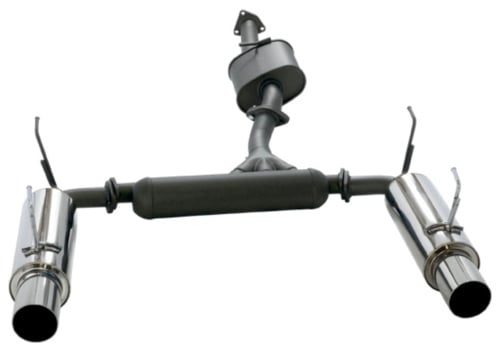


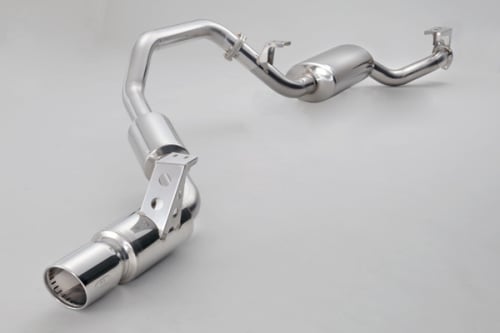

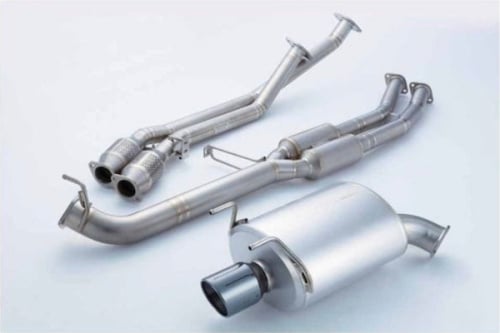


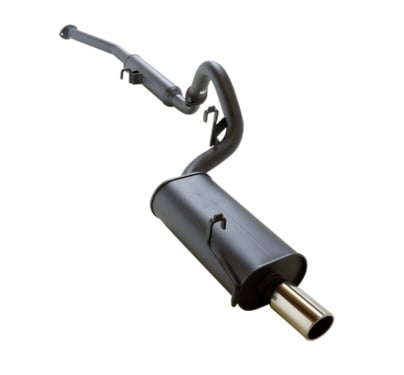


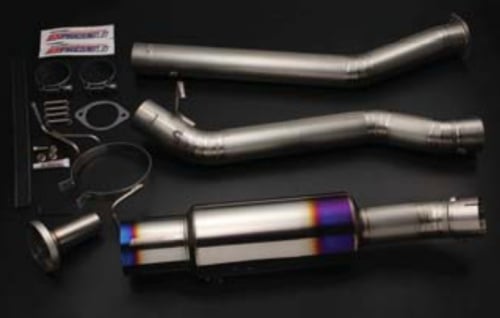


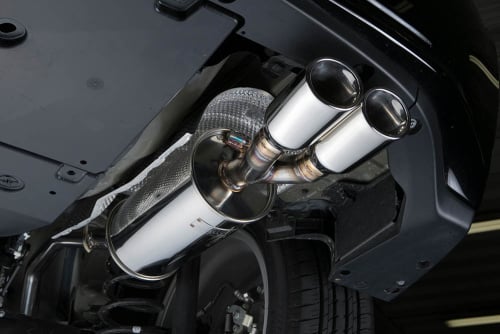


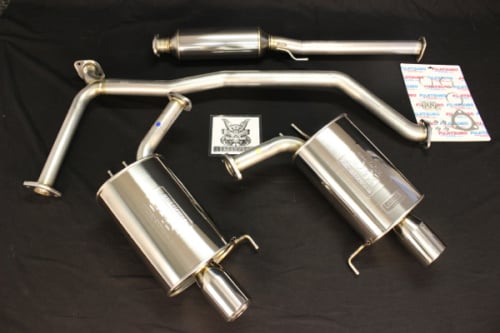
An exhaust system is chosen by how much of the pipework it replaces, the pipe sizes and material, and how loud it may be where the car is driven.
A cat-back system replaces everything behind the catalytic converter: the centre pipe, silencers and tail. This is the usual road upgrade, because the emissions equipment stays in place. A turbo-back system on a turbocharged car also replaces the front pipe from the turbine outlet, and usually brings a different catalytic converter or none, which limits where the car can be used. Owners after sound alone can change just the rear silencer.
Japanese makers give pipe sizes in millimetres, and tails as outside diameter. HKS's Hi-Power SPEC-L II for the GR86 is a useful example: a 65 mm pipe that splits into twin 50.8 mm pipes, finishing in 94 mm tails, all in SUS304 stainless steel. That pipe figure is taken at the widest point of the pipework, excluding the silencer shells and tails, so compare like with like between makers. A system is sized for the engine it was developed on; a heavily modified engine is better served by a system built for that level of power.
SUS304 stainless is the standard material for road systems. Titanium, used by Tomei's Expreme Ti and R1 Titan, is much lighter and turns blue and gold with heat, at a higher price.
In Japan, a replacement exhaust for a car built from April 2010 must also meet an acceleration-noise requirement. One that does carries a performance-confirmed plate (性能等確認済表示) from a body registered with the Ministry of Land, Infrastructure, Transport and Tourism, such as JQR; the SPEC-L II above carries a JQR number. Cars built before April 2010 are held to the close-proximity exhaust noise limit, and sports exhausts for them may carry a JASMA plate, the certification of the Japan Automobile Sports Muffler Association, set up in 1989 with its own standard for sports mufflers.
These plates show a system meets Japanese rules. Noise limits and inspections elsewhere differ, so check the rules where the car is registered. More on the whole system is in the exhaust guide.