New, Used & OEM Parts Search
Can't find what you are looking for? Contact Us and we're happy to help.
Your trusted source of JDM parts shipped from Japan
JDM parts shipped direct from Japan

Displaying 1 to 24 new parts of 80
1 to 24 of 80
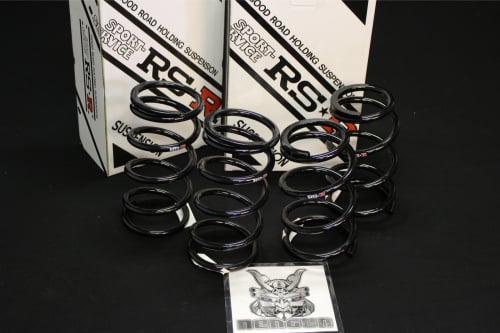


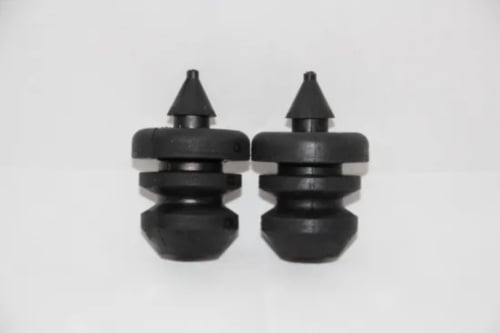
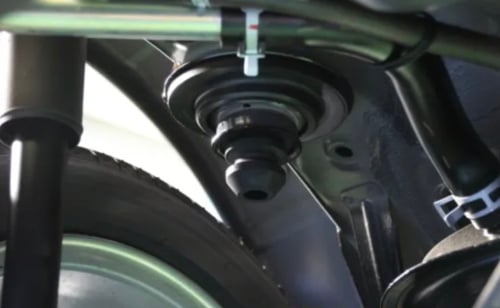


Start with how the car is driven: every day on broken roads, quick road driving with the odd track day, or a dedicated circuit, drift or time-attack build. That one decision sets how stiff the springs should be, how much adjustment the dampers need and how far to go with harder bushes and bracing. A complete suspension kit is the usual first step; arms, bushes and braces then refine what the kit does.
Nearly every handling part is made for one chassis, because it bolts to that car's own mounting points. Pick your car in the car selector to see only the parts made for it. Coilover springs are the main exception: they fit any damper with the right spring seat.
Japanese makers give spring rates in kgf/mm, the force in kilograms-force that compresses the spring by one millimetre. One kgf/mm is 9.81 N/mm, or about 56 lb/in, so a 10 kgf/mm spring is roughly 560 lb/in. Higher numbers are stiffer, and a road car usually wants far softer rates than a car on slick tyres.
Replacement springs are sold by inner diameter in millimetres, free length and rate. Swift's 65 mm ID springs, for example, come in several free lengths, such as 6, 7 and 8 inches. The inner diameter must match the coilover's spring seat, and the length has to suit the damper's stroke.
Damping is usually adjusted with a dial that clicks through a set number of steps from soft to firm, and some dampers adjust bump and rebound separately. Set both sides of an axle to the same click. On a full-length adjustable coilover, ride height is set by winding the damper body in its lower bracket, not by compressing the spring: using preload to gain height uses up suspension travel.
Lowering moves the suspension away from the angles it was designed for. Adjustable arms bring camber and toe back into range (camber is measured in degrees, and negative camber tilts the top of the tyre inwards). On a lowered strut car, roll centre adjusters lower the outer ball joint to restore the lower arm's angle.
Upper mounts with pillowball bearings sharpen steering response and often add camber adjustment, at the cost of more noise and vibration through the body. Harder bushes make the same trade for the arms. A strut brace ties the suspension towers together so the shell flexes less under cornering load.
Suspension and steering parts are safety-critical. Have them fitted by a qualified workshop and tightened to the car maker's torque figures, with bushed joints tightened at ride height, then have the wheels aligned. Rules on ride height, adjustable suspension and modified steering differ between countries and states, so check what applies where the car is registered before buying.