New, Used & OEM Parts Search
Can't find what you are looking for? Contact Us and we're happy to help.
Your trusted source of JDM parts shipped from Japan
JDM parts shipped direct from Japan


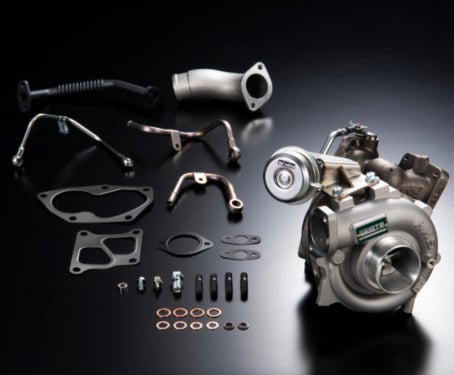
Full turbo kits provide an aftermarket turbo and all of the parts required installation for a specific vehicle. They provide an easy way to upgrade your turbo, with easy installation and verified performance characteristics.
Displaying 1 to 24 new parts of 32
1 to 24 of 32

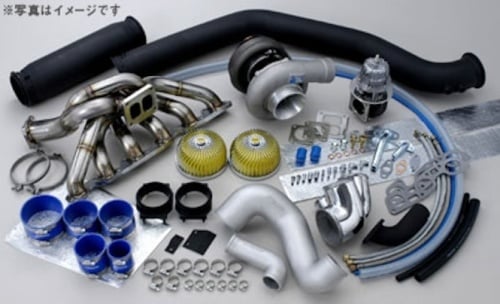

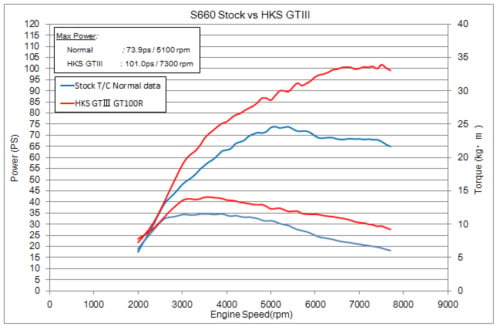

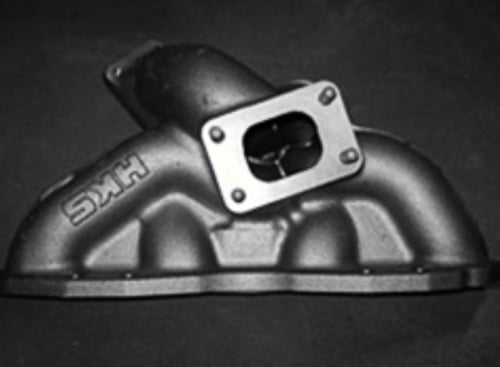
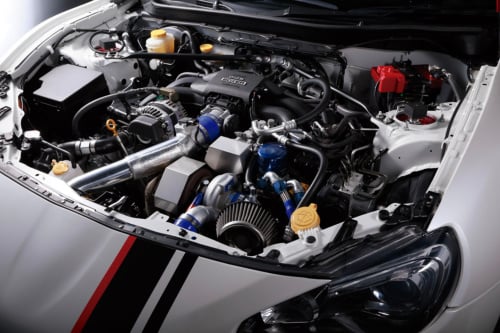


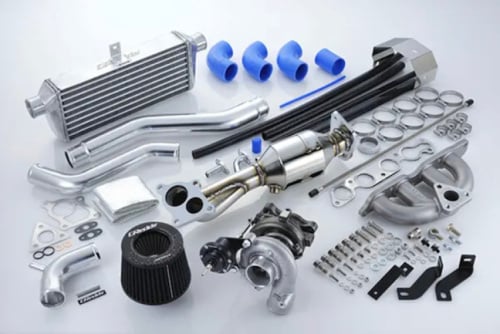
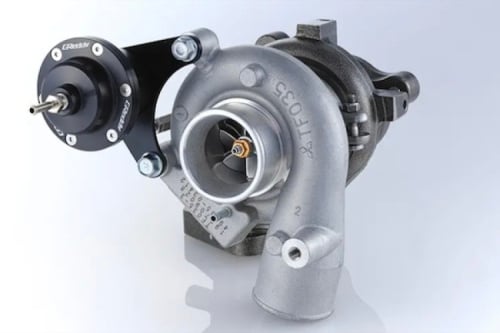


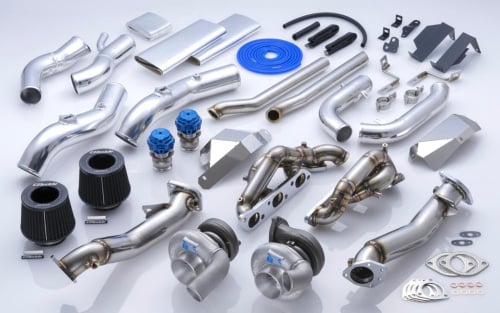

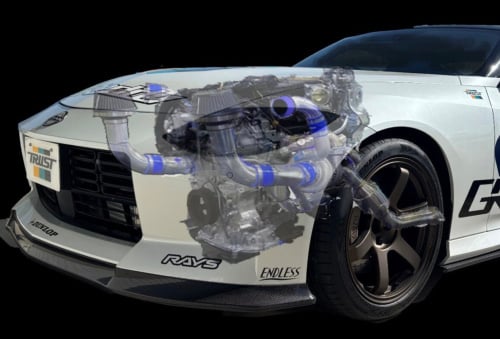


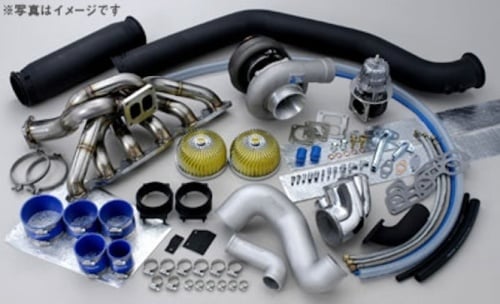


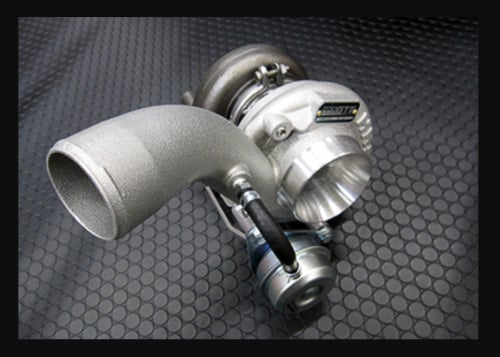


Decide the power you want and where in the rev range you want it, then choose the turbo or supercharger to suit. A turbo that bolts into the factory position keeps the standard manifold and pipework; turbo kits supply the manifold, turbo, pipes and fittings as a matched set. Supercharger kits are mostly for naturally aspirated engines: driven by a belt from the crankshaft, a supercharger gives boost that follows engine speed with no wait for exhaust flow.
More boost needs the rest of the car to keep up: fuel, intercooling, clutch and above all the ECU tune. Choose your car with the car selector to see the parts listed for it. HKS, GReddy, Tomei, Blitz and APEXi make turbochargers and boost parts for a wide range of Japanese engines.
A turbine housing's A/R relates the area of its inlet to the distance from that point to the wheel's centre. A smaller A/R builds boost sooner; a larger one flows more at high revs, at the cost of later boost. The same turbo is often offered with several housings, so choose the A/R for how the car is driven, not just the largest number.
Boost is pressure above atmosphere. 1 bar is 100 kPa, about 14.5 psi. Japanese makers usually quote kPa, and older material kgf/cm², which is 98.07 kPa, just under 1 bar. A boost figure always assumes the engine's fuel and tune are set up for it.
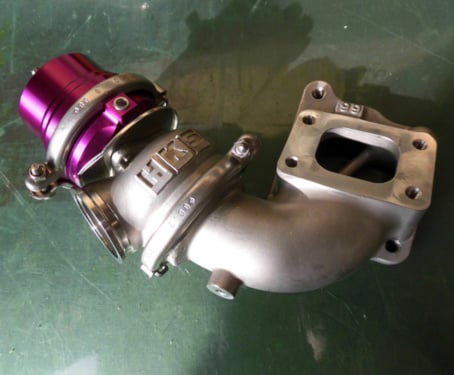
Boost is limited by a wastegate letting exhaust bypass the turbine. Internal wastegates are opened by an actuator, external wastegates are separate valves on the manifold, and in both the spring sets the base boost. Boost controllers, such as GReddy's Profec, hold the wastegate shut longer to raise boost above that base and keep it steady.
Blow-off valves release pressure when the throttle closes. On an engine with an air flow meter, venting to air releases air the ECU has already measured and fuelled for, which can leave the engine running rich between shifts or stumbling at idle. A recirculating valve, or a vented one with a return kit such as HKS's suction return set for the SQV, sends that air back into the intake behind the meter. Engines that meter by manifold pressure do not have this problem.
Turbo timers keep the engine idling for a set time after the key is turned off, so oil keeps flowing through a hot turbo instead of baking in its bearing housing. Leaving a running car unattended is an offence in some countries, including the UK, so check local rules before relying on one.