New, Used & OEM Parts Search
Can't find what you are looking for? Contact Us and we're happy to help.
Your trusted source of JDM parts shipped from Japan
JDM parts shipped direct from Japan

Displaying 1 to 24 new parts of 59
1 to 24 of 59


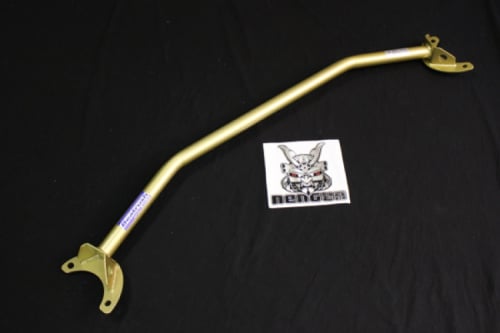
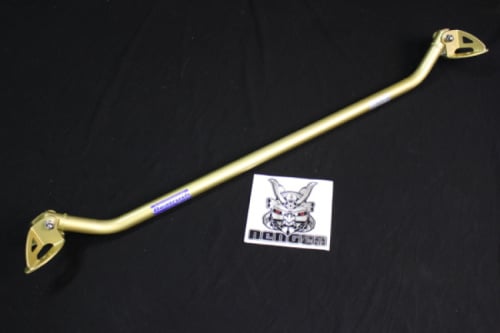
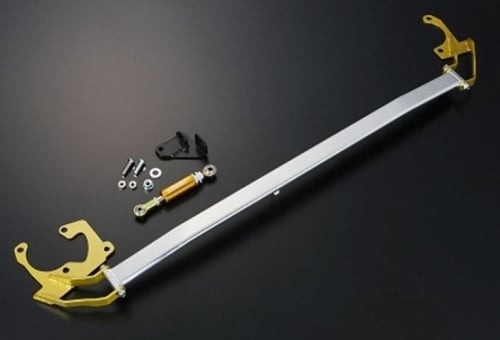
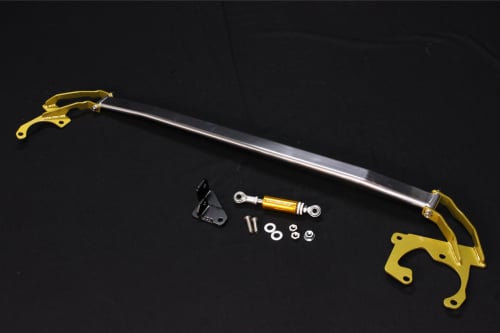


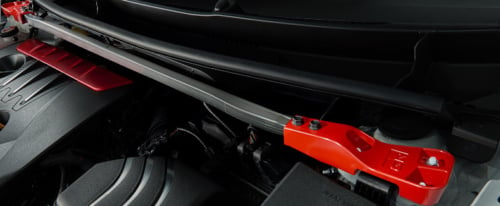
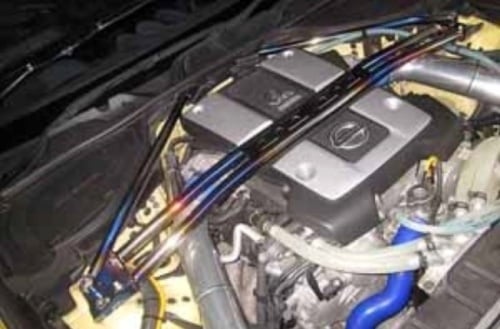

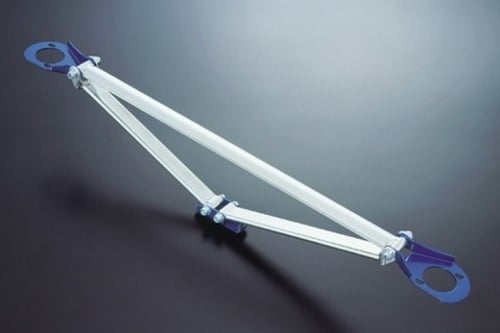


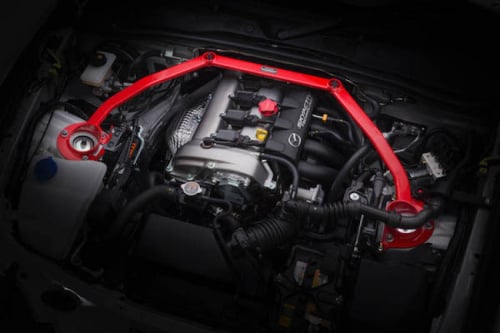
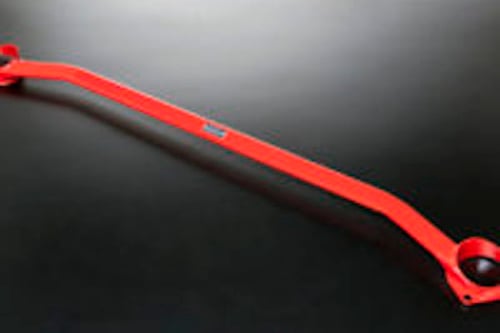

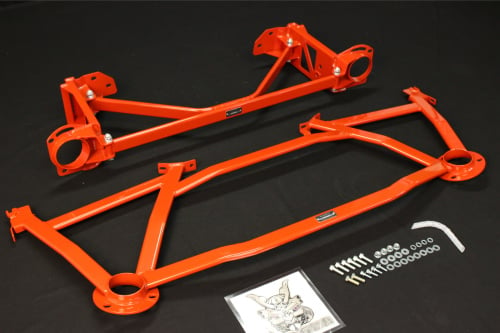


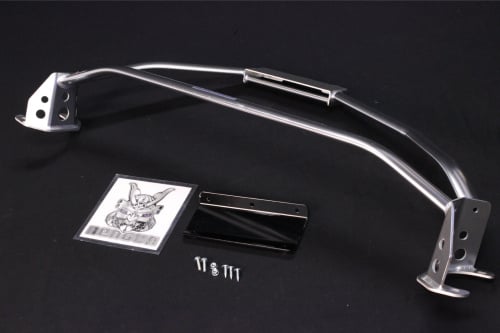
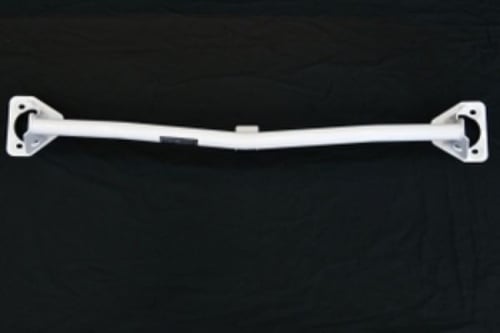
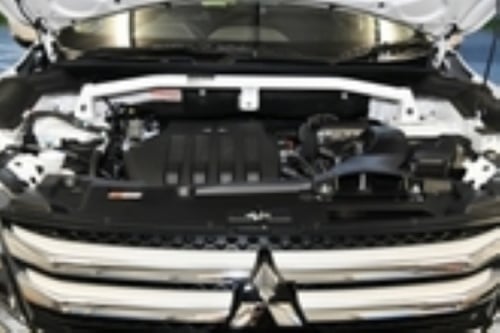


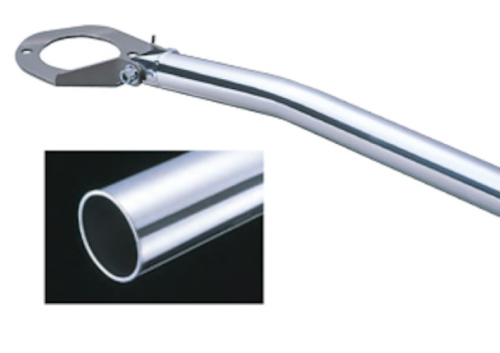
A strut brace ties the tops of the two suspension towers together, so a load on one tower is shared with the other and the distance between them stays the same in hard cornering. The gain is in steering precision and consistency, and it is most marked on cars with MacPherson struts at the front, where the tower tops carry the suspension's load directly.
Front braces are the common fit and the most noticeable. A rear brace spans the rear towers inside the boot or behind the rear seats, and suits coupés and hatches with an open rear structure. Some makers offer a third mounting point to the bulkhead or floor, which triangulates the brace; Cusco's OS range includes three-point versions.
A one-piece bar with solid brackets is the stiffest design. A hinged bar, with pivots at the brackets, is easier to fit around engine parts but gives up some of that stiffness, because the pivots let the towers lean. Choose a solid bar unless something in the engine bay rules it out.
A brace is made for one chassis and engine bay, and has to pass over the engine, intake and brake master cylinder; some Cusco front braces add a master cylinder stopper. Check clearance with an aftermarket intake, and with upper mounts or camber plates that change the tower top. A brace works with the rest of the chassis bracing and suspension; see the whole handling range.


